
It's Been a While... But We've Been Busy! 🍯🐝
If you've noticed we've been a little quiet on social media lately, don't worry—we haven't disappeared! The truth is, we've been spending more time where it matters most: in the bee yards and behind the scenes.
Winter has been anything but quiet. We've been monitoring hive health, managing varroa, preparing colonies for spring, harvesting some beautiful honey, and putting a lot of time into improving the way we share our honey's story with you.
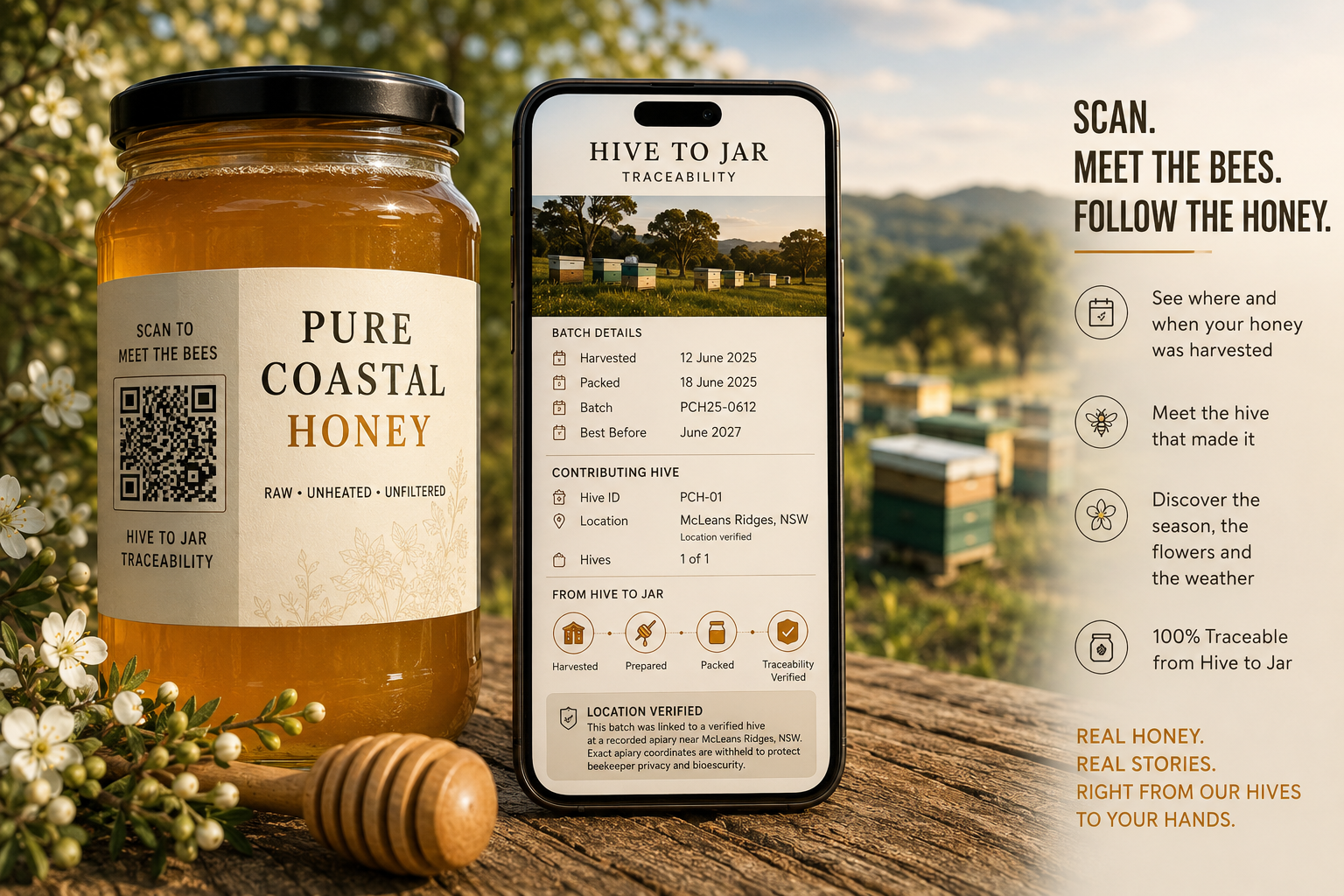
One project we've been particularly excited about is our new Pure Coastal Honey labels.
Every jar now includes a QR code that takes you beyond the label and lets you explore the story of the honey you're holding.
Powered by HiveCast AI, each QR code opens a dedicated Hive to Jar page for that specific batch. Rather than simply telling you where the honey came from, it shows the journey it has taken through our harvest and packing records.
By scanning the code, you can discover:
🍯 When your honey was harvested and packed
🐝 Which hive or hives contributed to the batch
🌸 Flowering notes recorded around harvest
🌦️ Weather conditions during the nectar flow
💧 Moisture content
📦 Batch information and traceability
This isn't just about creating another QR code—it's about helping you connect with the bees, the season and the care that goes into every jar.
Looking ahead, we're also developing new verification features within HiveCast AI that will allow hive locations to be securely verified while protecting the privacy and biosecurity of our apiaries. Customers will be able to see that their honey came from verified hives in a genuine local area, without revealing the exact location of our bees.
While we're excited to introduce this feature on our own Pure Coastal Honey jars, it's not just for us. The Hive to Jartraceability system is being developed as part of HiveCast AI and will be available to all HiveCast AI users. Our goal is to give Australian beekeepers—whether they're selling at local markets or producing honey commercially—an easy way to share the story behind every jar and build greater trust with their customers.
It's just one more way we're working to support Australian beekeepers through practical, innovative tools that strengthen transparency, traceability and consumer confidence.
Every jar has a story. We're simply making it easier for you to discover it.
Scan the QR code, meet the bees behind your honey, and follow its journey from Hive to Jar. 🐝🍯
Apiary Update: Mite Counts Down, Macadamias Flowering, Bees Working Hard
This weekend we removed treatment from the hives and followed up with mite checks across the yard.
The result was encouraging: the average mite count came back at 1.6 across the hives checked.
After the pressure we’ve been watching this season, seeing that drop is a good sign. It does not mean the job is finished, and it definitely does not mean we stop monitoring. Varroa management is not a one-and-done job. It is checking, recording, treating when needed, and then checking again to make sure the treatment has done what it was meant to do.
For us, this is exactly why regular mite monitoring matters. Without the checks, you are only guessing. With the checks, you can see what is happening in the hive and make better decisions before things get away from you.
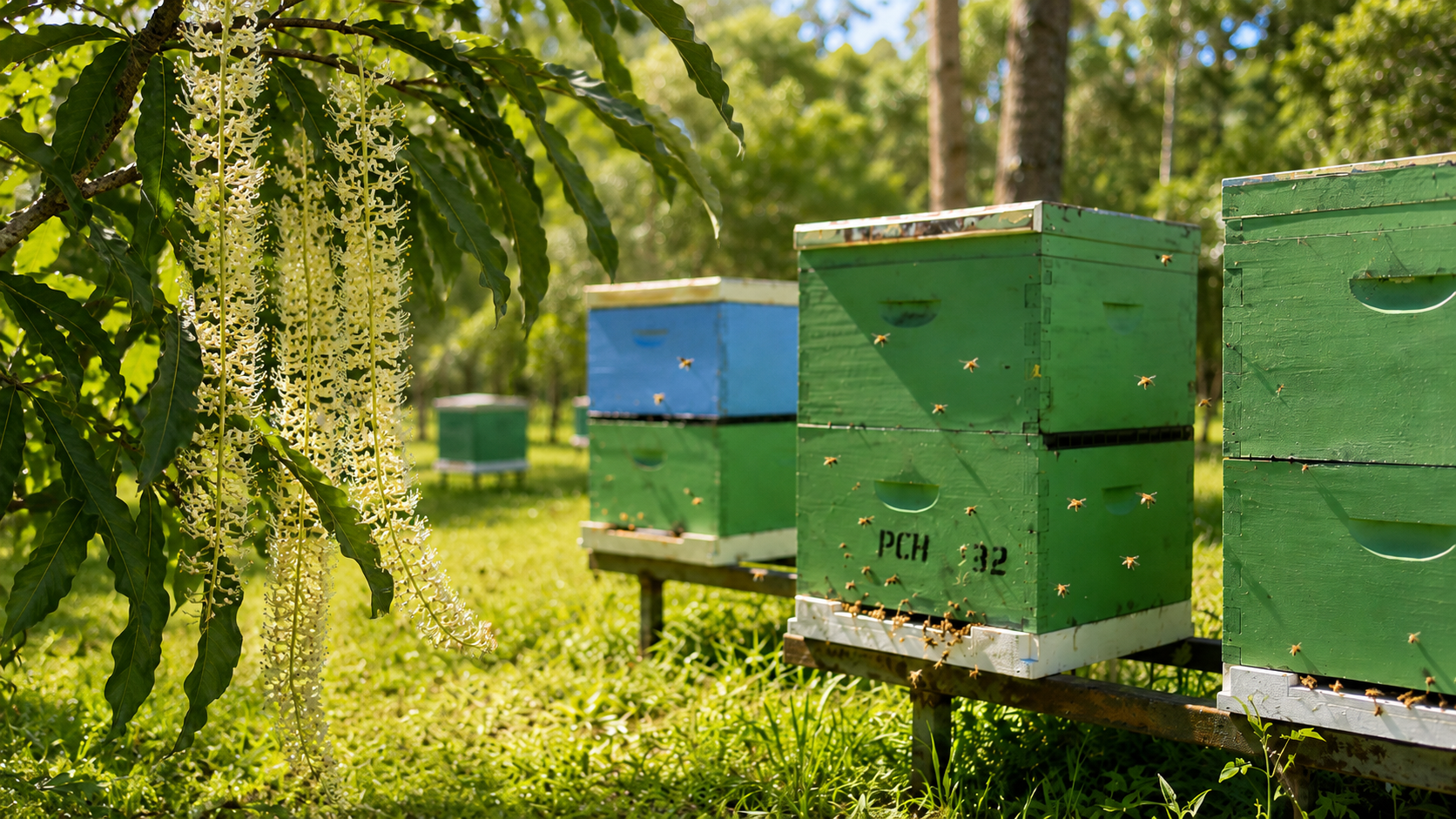
The timing has also lined up with the macadamia flowering now starting to come on. The bees were highly active, working strongly at the entrances, and we’re seeing supers beginning to fill.
That is always a good sight.
After a tough run with Varroa, small hive beetle pressure, weather changes, and the constant work of keeping colonies healthy, it is encouraging to see the bees responding well and making the most of the available forage.
Macadamia flowering can be an important seasonal nectar and pollen source in our area, and the bees are clearly taking advantage of it. Strong activity at the hive entrances, bees moving with purpose, and weight starting to build in the supers are all signs we like to see.
Good bee health is never just about one thing. It is the combination of strong colonies, good forage, timely treatment, careful monitoring, and paying attention to what the bees are telling us.
For now, we’ll keep watching the mite levels, keep an eye on colony strength, and hopefully see the supers continue to fill as the macadamias keep flowering.
Pure Coastal Honey
Small batch. Local. Seasonal. Managed with care. 🐝🍯
ANEL Hive Trial, Mechanical Brood Break and Pollen Collection Trial Commence
ANEL Insulated Hive Trial
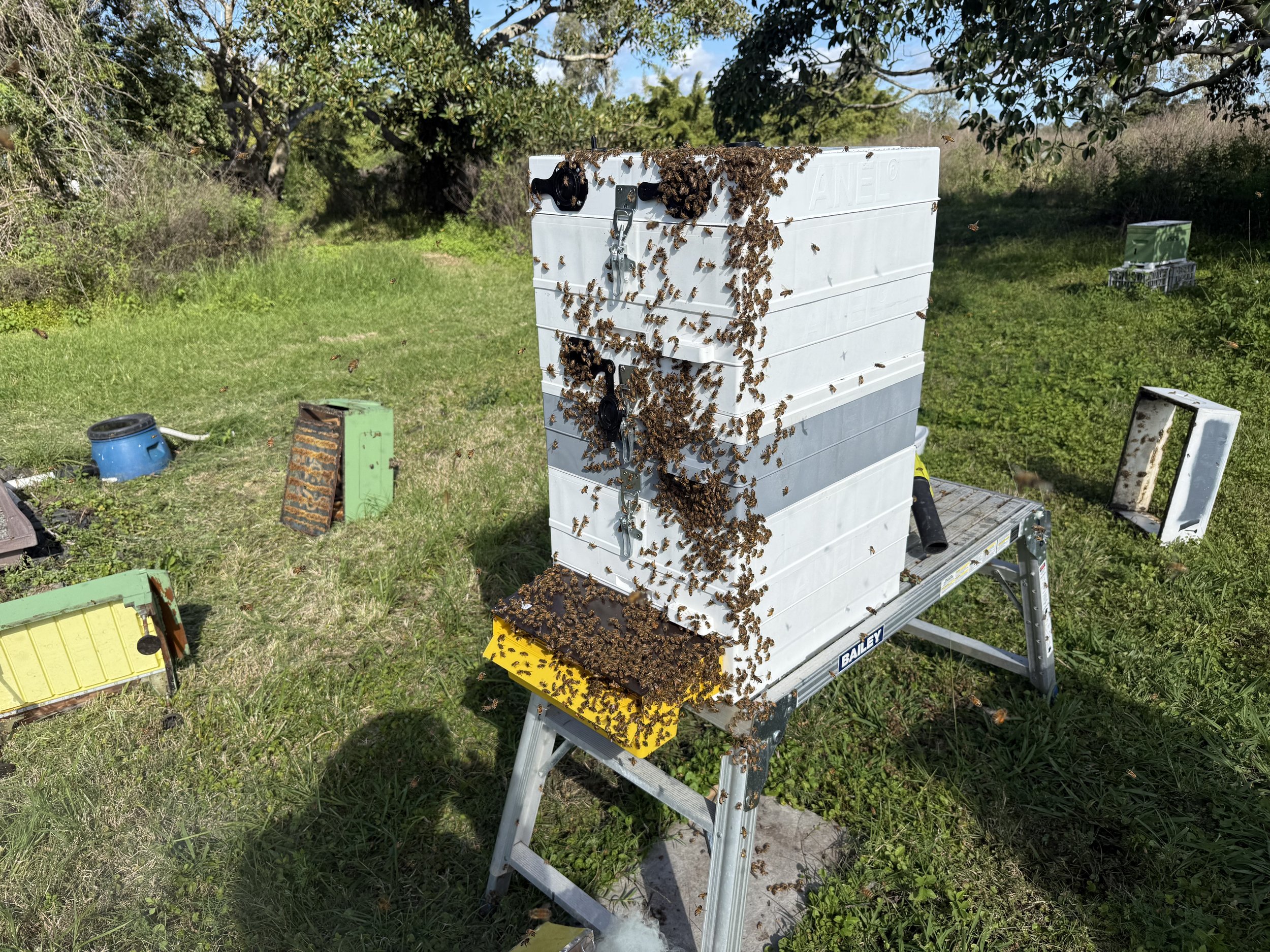
Today marked a significant milestone for both Pure Coastal Honey and HiveCast AI as we launched several new field trials aimed at improving colony management, integrated pest management and data-driven beekeeping. One of our established Flow Hive colonies was transferred into a new ANEL insulated hive purchased from Lyson Australia.
There has been considerable discussion within the beekeeping industry about insulated hives and their potential benefits, including improved brood nest temperature stability, reduced energy expenditure by bees, better colony development and improved seasonal performance. While many claims exist, we believe the best approach is to test equipment under real-world Northern Rivers conditions.
This trial will help us determine whether insulated hives offer measurable advantages compared with our current timber equipment and Hive Doctor base systems.
Over the coming months we will monitor:
Colony strength
Brood development
Honey production
Temperature and moisture management
Pest and disease pressure
Seasonal performance
Bee behaviour
Rather than relying on opinions, we intend to collect real field data and share the results openly.
HiveCast AI Mechanical Brood Break Program
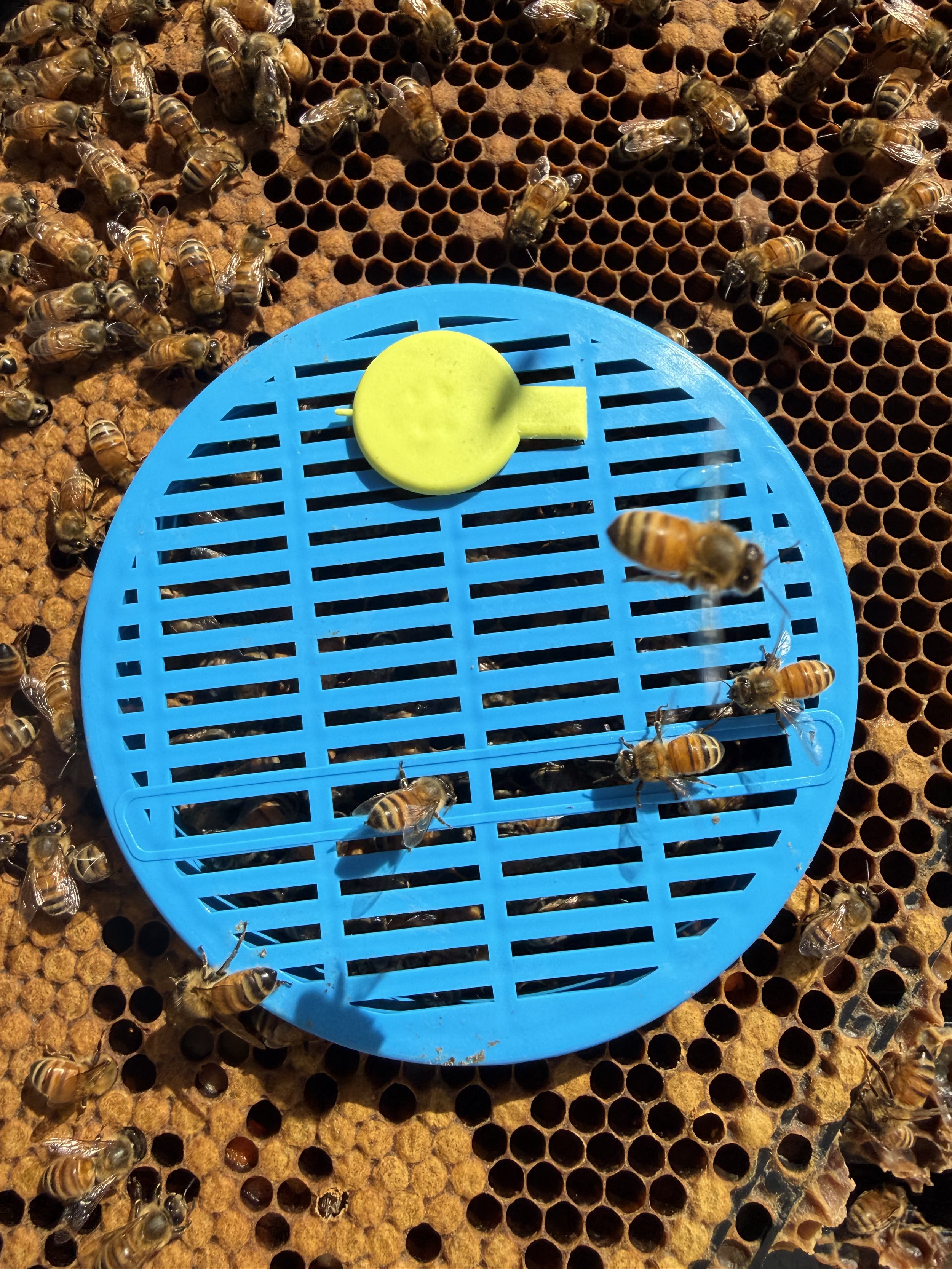
At the same time, the colony entered a 21-day queen confinement program using a queen confinement cage.
This is the first colony to be managed through HiveCast AI's new Mechanical Brood Break workflow, which has been developed to help beekeepers plan, track and evaluate brood break strategies.
The process is simple:
The queen is confined for 21 days.
Existing worker brood emerges.
The colony reaches a broodless state.
A follow-up oxalic acid vapour treatment is applied during the broodless window.
The objective is to expose Varroa mites when they are no longer protected beneath capped brood, improving treatment effectiveness while reducing reliance on synthetic miticides.
Every stage of the process will be recorded through HiveCast AI, allowing future analysis of colony recovery, mite reduction and treatment outcomes.
Pollen Collection Trial
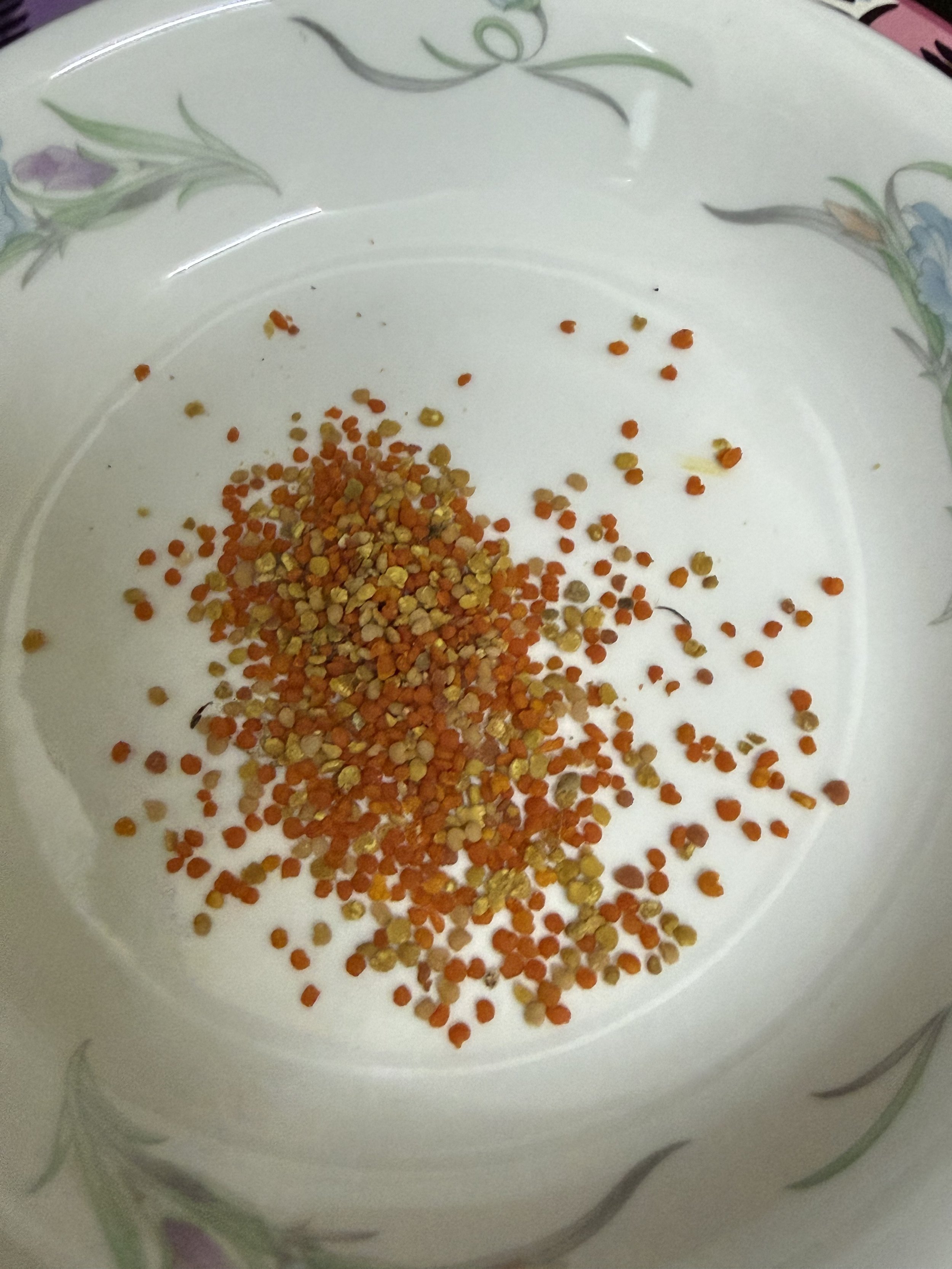
Today also marked the start of our pollen collection trial.
Using a pollen trap fitted to the hive, Cat successfully collected our first batch of pollen.
This trial will help us better understand local forage availability and seasonal pollen flows while evaluating potential impacts on colony performance.
Future observations will include:
Pollen collection volumes
Seasonal variation
Pollen colour diversity
Local forage sources
Colony impact
The first collection showed a healthy range of pollen colours, highlighting the diversity of forage currently available to the colony.
HiveCast AI Colony Snapshot
Before commencing the trial, HiveCast AI generated the following colony assessments:
Hive. RiskStrength. Trend Treatment Status.
Sentinel. Low. StrongStable 94 days post-Apivar
Lindy's Low Strong 92 days post-Bayvarol
Flow (now ANEL). Low Strong 92 days post-Bayvarol
NUC. Low Strong No treatment recorded
At this stage all colonies remain classified as "Assessment Pending" as HiveCast AI continues building long-term resilience profiles for each hive.
The Flow colony selected for transfer into the ANEL hive was considered a strong, low-risk colony and therefore provides an excellent candidate for evaluating hive performance without significant underlying health concerns influencing the results.
The Sentinel hive continues to show stability almost 100 days after completion of its Apivar treatment, while both the Flow and Lindy's colonies are now more than 90 days post-Bayvarol treatment.
Varroa Monitoring Results
Routine mite monitoring was also completed during today's inspection.
Results were:
ANEL Hive – 2 mites
Flow Hive – 0 mites
Sentinel Hive – 0 mites
NUC – 20 mites
The NUC recorded the highest mite load and has since received intervention and will be monitored closely over coming weeks.
These results once again reinforce the importance of regular monitoring. Colonies in the same apiary and under similar management can show very different mite levels, demonstrating why testing remains one of the most important tools available to beekeepers managing Varroa.
Looking Ahead
Today's activities bring together several key areas of interest for both Pure Coastal Honey and HiveCast AI:
Insulated hive performance
Mechanical Varroa management
Brood break workflows
Pollen collection
Colony resilience monitoring
Data-driven beekeeping
As data accumulates, we will continue sharing both successes and challenges. Real-world field trials are essential if we are to improve management practices, better understand our colonies and help Australian beekeepers adapt to the ongoing challenges presented by Varroa.
The ANEL hive trial, HiveCast AI Mechanical Brood Break Program and pollen collection trial are now officially underway, and we're looking forward to sharing the results over the months ahead.
Confirmed American Foulbrood: A Reminder That Monitoring Is About More Than Varroa
This week, a routine hive inspection at one of our McLeans Ridges apiaries led to a discovery that no beekeeper wants to make.
During a brood inspection, several cells raised concerns. While the colony did not display some of the classic signs many beekeepers associate with American Foulbrood (AFB), there were a number of subtle indicators that warranted further investigation.
There was no obvious foul odour and the cappings were not heavily sunken. However, some brood cappings contained small perforations or holes, and there were enough irregularities in the brood pattern to suggest that something was not quite right.
A rope test was conducted and produced a positive result.
Following the inspection, a smear sample was submitted to NSW DPI for laboratory analysis.
On 5 June 2026, the laboratory confirmed the presence of American Foulbrood. The sample tested positive for AFB and negative for European Foulbrood.
Finding AFB is never good news.
However, this experience reinforces several important lessons that extend well beyond a single infected hive.
The Importance of Acting Early
Nobody wants to find AFB in their apiary.
However, this detection demonstrates why routine inspections remain one of the most important management practices available to beekeepers.
Had this colony not been inspected carefully, the disease could have continued to develop unnoticed, increasing the risk of spread within the apiary and potentially beyond.
Early detection provides options.
Late detection often means greater losses.
One positive aspect of this detection was that the colony was still relatively strong when the disease was identified.
Colonies that collapse unnoticed can become targets for robbing by neighbouring bees, potentially allowing contaminated honey and AFB spores to be carried back to other hives. In this case, the disease was detected before the colony reached that stage. The hive remained strong, there was no evidence of robbing activity, and management decisions could be made before the colony became a potential source of wider spread.
While AFB is never a result any beekeeper wants to receive, finding it before colony collapse significantly reduces the risk of robbing events and limits opportunities for disease transmission within the local bee population.
This case also serves as a reminder that not every AFB infection presents as the textbook example shown in photographs. Sometimes the signs are subtle. A few perforated cappings, irregular brood patterns, or simply a feeling that something does not look quite right can be enough reason to investigate further.
This is another reason why regular brood inspections remain so important. Early detection doesn't just protect the affected colony's neighbours—it helps protect the wider beekeeping community.
Varroa Isn't the Only Threat
Since varroa arrived in Australia, much of the industry's attention has understandably focused on monitoring mite numbers, treatment choices and colony survival.
Varroa deserves that attention.
It has fundamentally changed the way we manage bees and dramatically increased the workload required to keep colonies healthy.
However, this experience serves as a timely reminder that brood diseases have not disappeared.
AFB remains one of the most serious bacterial diseases affecting honey bees. It is highly contagious, extremely resilient and capable of surviving for decades in contaminated equipment.
As beekeepers, we cannot afford to become so focused on one threat that we overlook another.
Every brood inspection should be viewed as both a varroa assessment and a disease assessment.
The challenge facing modern beekeepers is no longer managing a single pest or disease. It is learning to manage multiple threats simultaneously.
Monitoring Provides Information
Interestingly, this AFB investigation occurred during ongoing varroa monitoring across our apiaries.
Recent alcohol wash results taken during active synthetic treatment have shown encouraging trends, with mite numbers dropping by more than 50 percent in several monitored colonies.
While those results are positive, they also reinforce a broader lesson:
Monitoring provides information.
Without information, management becomes guesswork.
Whether the issue is varroa, AFB, Small Hive Beetle, queen performance or nutrition, regular inspections provide the evidence needed to make informed decisions.
In this case, monitoring identified a disease issue before it became a larger biosecurity problem.
The same principle applies to varroa.
The same principle applies to Small Hive Beetle.
The same principle applies to every aspect of colony management.
Good decisions start with good information.
What Happens Next?
Following confirmation, the hive will be managed in accordance with NSW biosecurity requirements.
While losing a colony is never pleasant, protecting surrounding colonies and the wider beekeeping community must remain the priority.
Biosecurity is not always convenient.
Sometimes it requires difficult decisions.
However, responsible action today helps prevent larger problems tomorrow.
Every beekeeper has a role to play in reducing the spread of pests and diseases.
That responsibility begins with regular inspections and acting when something does not look right.
Where HiveCast AI Fits
One of the lessons from this experience is how difficult it can sometimes be for beekeepers to quickly locate reliable biosecurity information when an issue is discovered.
This is one of the reasons HiveCast AI continues to evolve.
While HiveCast AI is primarily being developed as an apiary forecasting and monitoring platform, there is also an opportunity to place important biosecurity information directly into the hands of beekeepers when they need it most.
Reporting pathways, disease identification resources, management guides and regional awareness all have the potential to help beekeepers respond faster and with greater confidence when unusual signs are discovered.
The goal is not to replace expert advice, laboratory testing or regulatory agencies.
The goal is to make it easier for beekeepers to know where to go, who to contact and what steps to take when something unusual is found.
Because when it comes to bee diseases, time matters.
Final Thoughts
Finding AFB is never a result any beekeeper hopes for.
Yet if there is a positive lesson from this experience, it is that monitoring worked exactly as intended.
A routine brood inspection identified something unusual.
The issue was investigated.
A sample was submitted.
The disease was confirmed.
And action can now be taken before the colony collapsed and before robbing activity had the opportunity to spread contamination further.
That process is exactly how biosecurity is supposed to work.
Inspect regularly.
Trust your observations.
Investigate the unusual.
And remember that monitoring is about far more than varroa.
Healthy bees start with informed beekeepers.
🐝
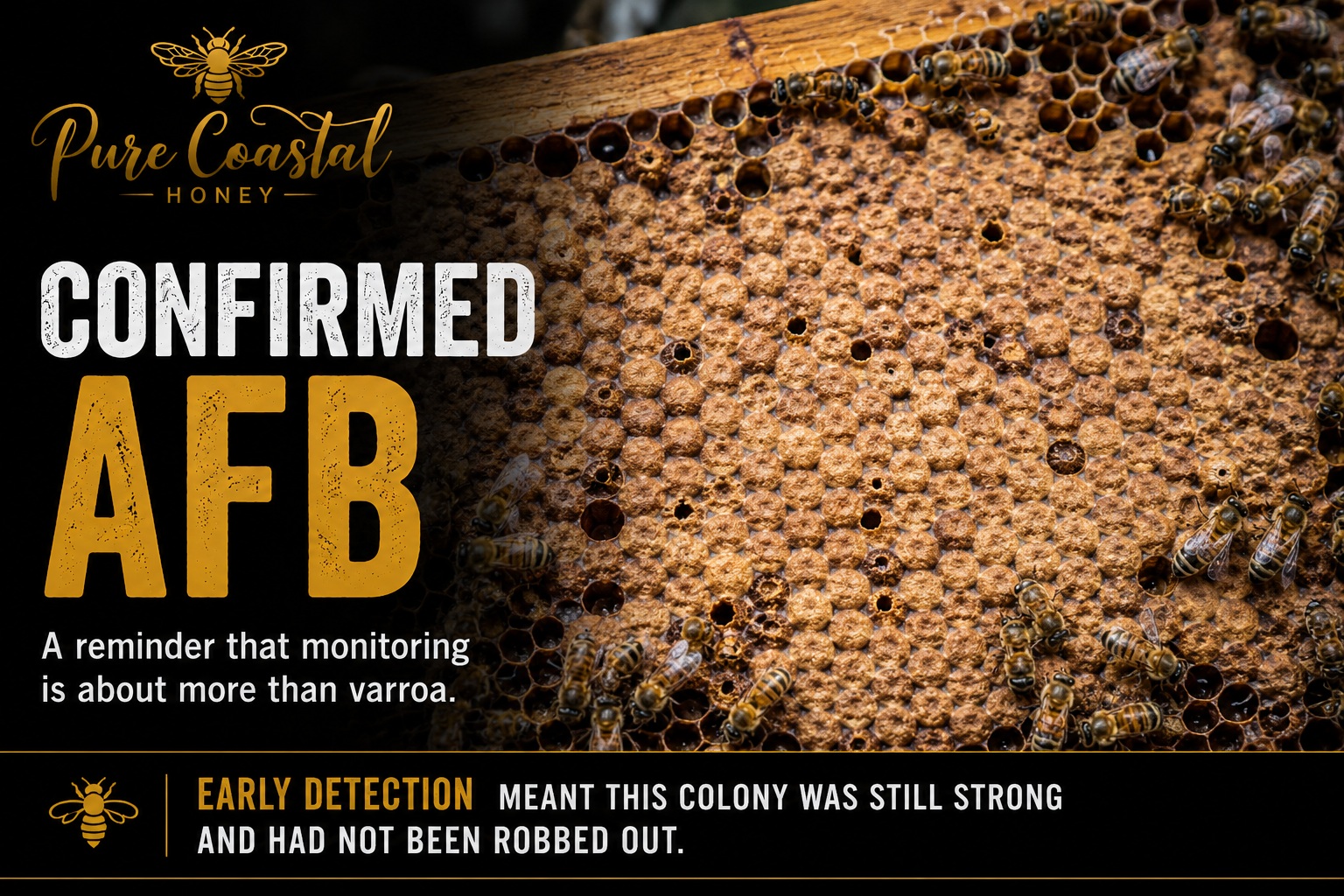
What We Found This Week Reminded Me Why Monitoring Matters
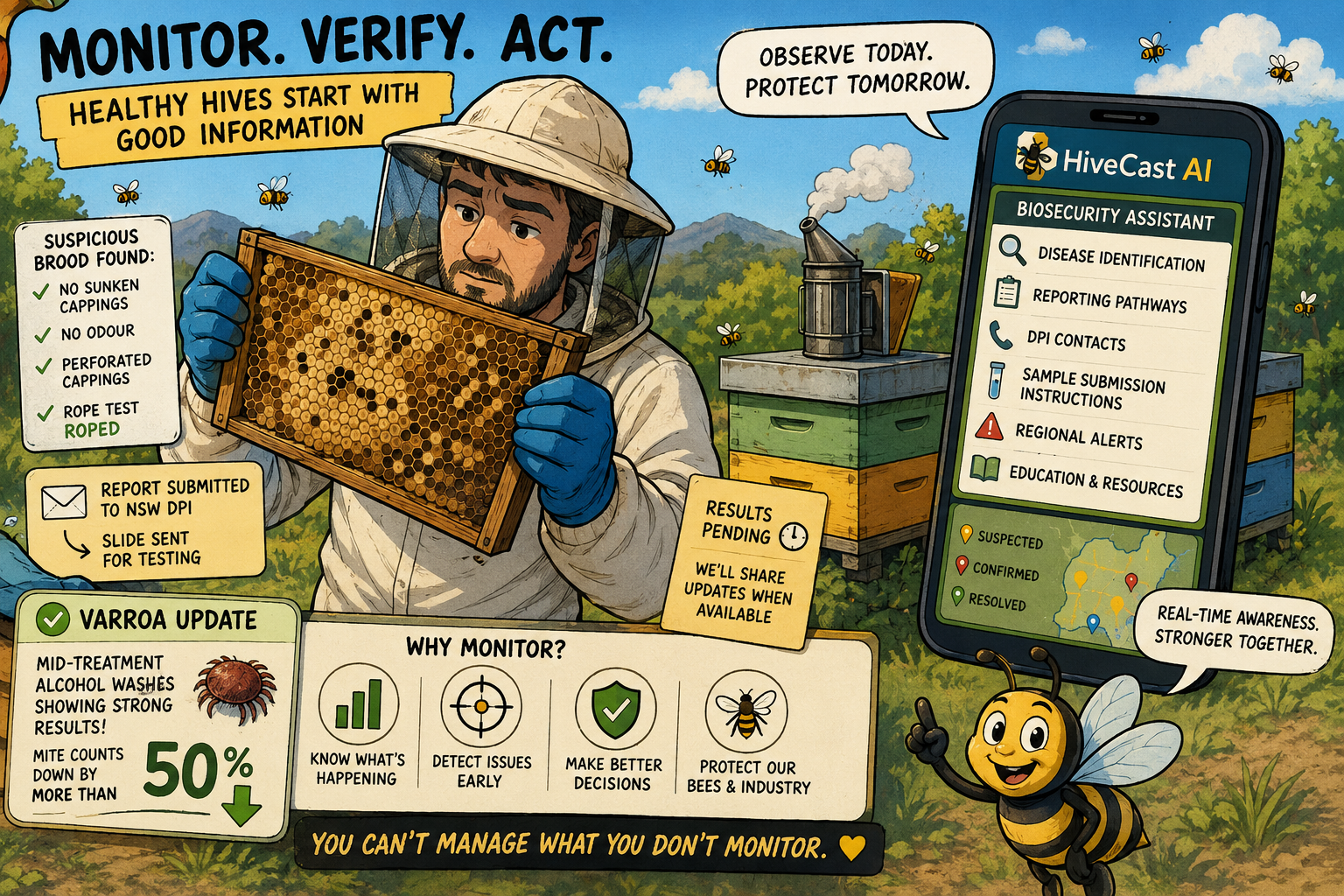
This week, during a routine inspection at one of our McLeans Ridges apiaries, I came across brood that immediately caught my attention.
There were no obvious sunken cappings.
There was no foul odour.
What I did find were scattered perforated cappings and brood that simply didn't look right.
When I performed a rope test, the larval remains roped sufficiently for me to take the situation seriously.
A report was immediately submitted to NSW DPI and a smear slide has been sent for laboratory testing.
At this stage, the cause remains unconfirmed. It may prove to be American Foulbrood, another brood disease, or something else entirely. Until testing is completed, all we can do is follow the correct reporting process and wait for the results.
But the experience reinforced something important.
Monitoring Is About More Than Varroa
Since varroa arrived, many of us have understandably focused on mite counts, treatment schedules and treatment resistance.
Those things are critically important.
However, this inspection was a reminder that every brood frame deserves attention.
Sometimes a hive doesn't present with textbook symptoms.
Sometimes there is no obvious smell.
Sometimes the cappings aren't heavily sunken.
Sometimes all you know is that something doesn't look normal.
Good beekeeping starts by paying attention to those observations.
At The Same Time, We Continue To Monitor Varroa
While investigating this suspected brood issue, we have also continued our regular varroa monitoring program.
Over the past few weeks we have conducted alcohol washes during active synthetic treatment programs across several apiaries.
One of the questions many beekeepers are asking right now is whether treatments are still working.
Based on what we are seeing in our own operation, the answer appears to be yes.
Our mid-treatment alcohol washes have generally shown mite counts reducing by more than half compared with pre-treatment counts.
These observations relate only to our own hives and should not be interpreted as representing every apiary or every mite population. However, the results are encouraging and demonstrate why monitoring remains essential.
Without mite washes, we would simply be assuming the treatments were working.
Instead, we have evidence that mite numbers are moving in the right direction.
The Bigger Lesson
The most valuable information this week wasn't finding suspicious brood.
The most valuable information wasn't seeing mite counts decline.
The most valuable information was knowing what was actually happening inside the hive.
Too often, beekeepers are forced to make decisions with incomplete information.
A treatment is applied but never verified.
A brood pattern looks unusual but is ignored.
A disease concern is discussed online but never reported.
Good biosecurity and good hive management both start with observation, investigation and verification.
Turning Information Into Action
One thing this week's inspection reinforced for me is that information is only useful if beekeepers can access it when they need it.
Most of the resources already exist. Reporting pathways exist. DPI contact information exists. Disease information exists.
The challenge is often finding it quickly when you're standing in front of a hive wondering what to do next.
This is one of the reasons we continue developing HiveCast AI.
While HiveCast began as a platform focused on weather, inspections and apiary management, we increasingly see a role for it as a practical biosecurity and decision-support tool.
Imagine discovering suspicious brood and having immediate access to:
Disease identification resources
Reporting pathways
DPI contact information
Sample submission instructions
Regional pest and disease alerts
Relevant educational material
Not buried in old web pages, forgotten emails or scattered PDFs, but available when it is actually needed.
We also see value in helping beekeepers understand what is happening around them. Not through fear or panic, but through awareness. Where appropriate, HiveCast AI could allow reports of suspected or confirmed pest and disease events to contribute to regional awareness mapping, helping beekeepers better understand emerging risks within their area.
The goal is not more data.
The goal is putting useful information at a beekeeper's fingertips when decisions need to be made.
Whether this week's sample comes back positive or negative, the lesson remains the same:
You cannot manage what you do not monitor.
The Reinvasion Excuse
One of the more interesting trends I've noticed since varroa arrived is how often the word reinvasion appears in discussions about rising mite numbers.
To be clear, reinvasion is real.
Bees drift. Colonies rob weakened hives. Wild colonies collapse. Neglected hives can become significant sources of mites for surrounding apiaries. These are well-documented pathways that can contribute to increased mite pressure.
However, I believe there is a growing tendency within parts of the beekeeping community to use reinvasion as a catch-all explanation whenever mite numbers increase.
The reality is often far more complicated.
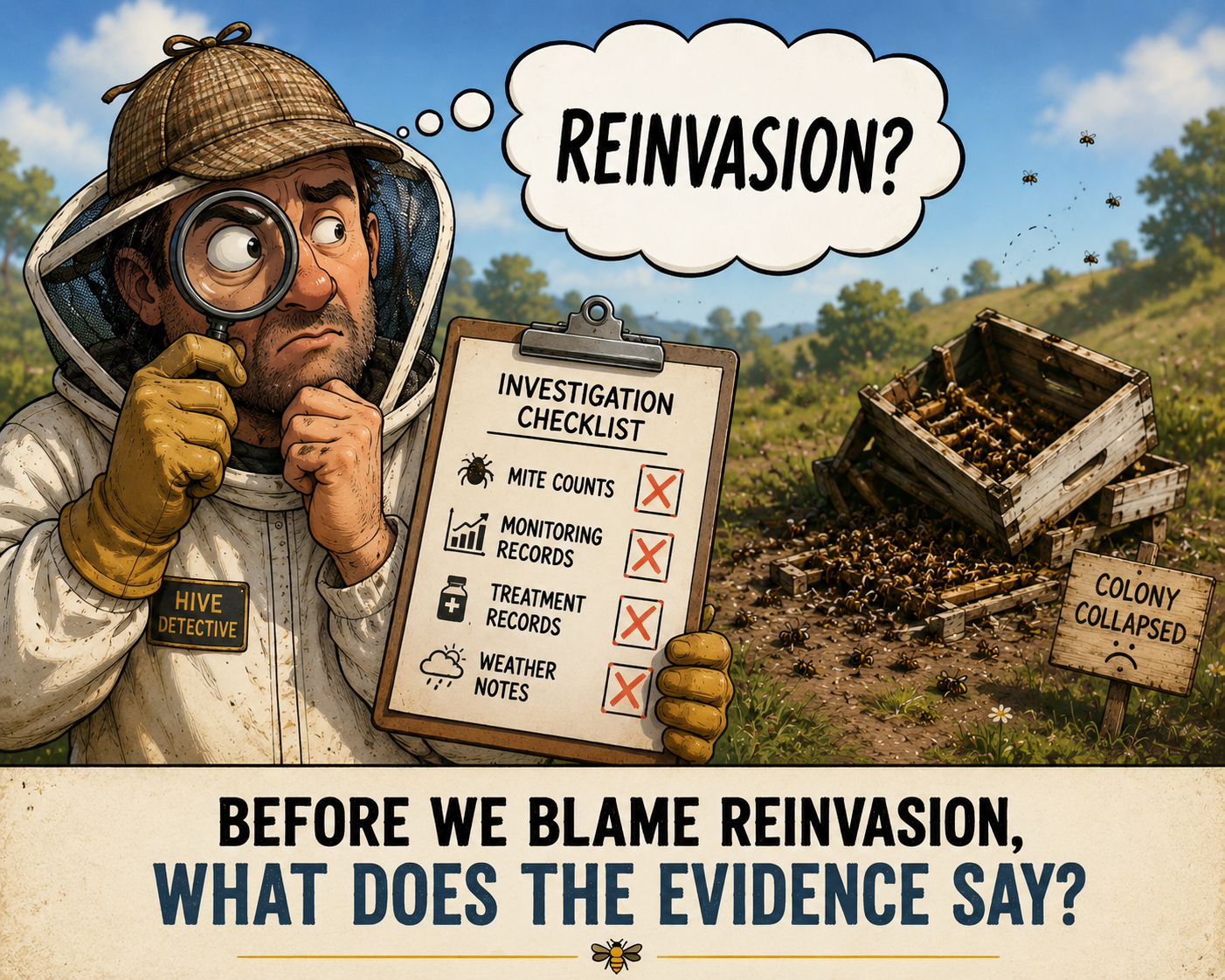
What Do Your Records Say?
When mite numbers rise, the first question should not be:
"Who gave me mites?"
The first question should be:
"What do my records tell me?"
Without monitoring, it becomes almost impossible to separate reinvasion from normal mite population growth, treatment failure, seasonal brood expansion, or management issues.
Varroa populations are designed to grow. Every brood cycle provides new opportunities for mites to reproduce. In a colony with ample brood and favourable conditions, mite numbers can increase substantially without a single mite arriving from outside the apiary.
Monitoring provides the context needed to understand what is actually happening.
Without data, we're left with assumptions.
Our Own Experience
What has made me think about this recently is what we have observed within our own operation.
Over recent months, we have seen reports of colony collapses and significant varroa problems in apiaries relatively close to our own. By the reinvasion theory alone, we should perhaps be seeing dramatic increases in mite numbers.
Instead, what we have observed is something different.
Our mite counts have been rising, but they have been rising gradually.
Not exploding.
Not suddenly jumping from low levels to catastrophic levels overnight.
Instead, we have seen the kind of slow increase that might be expected from ongoing population growth combined with normal environmental pressure.
That doesn't prove reinvasion isn't occurring.
In fact, some level of reinvasion is probably occurring all the time.
What it does demonstrate is that without monitoring, it would be very easy to look at a rising mite count and immediately blame neighbouring colonies while ignoring what may simply be the natural progression of the mite population within the hive itself.
The Difference Between an Event and a Trend
This is where monitoring becomes incredibly valuable.
A single mite count tells you where you are today.
A series of mite counts tells you the story.
The trend often matters more than the number itself.
A colony moving from 3 mites to 5 mites to 8 mites over several months is telling a very different story from a colony that jumps from 3 mites to 25 mites in a short period.
One may indicate gradual population growth.
The other may indicate a significant event, such as treatment failure, collapsing colonies nearby, robbing pressure, or genuine reinvasion.
Without historical records, those two situations can look identical.
Why HiveCast AI Matters
This is one of the reasons we are developing HiveCast AI.
The goal is not simply to record mite counts.
The goal is to provide context.
Imagine two beekeepers entering exactly the same alcohol wash result.
Twenty mites.
On paper, they look identical.
But what if one beekeeper's previous counts were:
5 mites
8 mites
12 mites
16 mites
20 mites
While the other beekeeper's previous counts were:
2 mites
3 mites
4 mites
5 mites
20 mites
Those are completely different situations.
One shows a gradual trend.
The other shows a sudden change.
The number alone doesn't tell the full story.
The trend does.
Over time, platforms like HiveCast AI may help identify these patterns at a much larger scale. By combining monitoring records, weather conditions, seasonal brood patterns, management practices and regional signals, we can begin to understand whether we are looking at normal population growth or something more unusual.
Not guess.
Not assume.
Understand.
Moving Beyond Assumptions
As varroa becomes a permanent part of Australian beekeeping, I believe one of the biggest shifts we need to make is moving from explanation-based beekeeping to evidence-based beekeeping.
Reinvasion is real.
Treatment resistance is real.
Management issues are real.
Seasonal brood dynamics are real.
The challenge is determining which factor is driving the result we are seeing.
That answer rarely comes from a Facebook comment, a rumour, or a theory.
It comes from monitoring.
Because the beekeepers most likely to identify a genuine reinvasion event are usually the ones collecting enough data to recognise that something unusual has happened.
And sometimes the most important question isn't whether reinvasion occurred.
It's whether we have enough information to know the difference.
Telemetry and Forecasting — Why We Believe They Work Together
Over the past few months, we’ve also been trialling BeeSTAR hive monitoring equipment alongside HiveCast AI forecasting across several apiaries.
What has become increasingly clear to us is that these systems are not competitors.
They solve different parts of the same problem.
Telemetry systems provide insight into what is happening inside the hive right now — hive temperature trends, activity changes, environmental shifts, and colony behaviour patterns that may otherwise go unnoticed between inspections.
HiveCast AI focuses more on the outside pressures influencing those colonies — weather conditions, humidity, rainfall, inspection suitability, beetle pressure, forage conditions, and treatment timing.
One looks inward at the hive.
The other looks outward at the environment surrounding it.
When combined together, they begin creating a much clearer picture of overall hive health and apiary conditions.
For example:
A telemetry alert showing unusual hive behaviour may make more sense when paired with rapidly changing weather conditions.
Elevated beetle risk forecasts become more valuable when compared against real hive activity trends.
Treatment timing decisions become stronger when environmental suitability and colony conditions are considered together.
As resistant varroa strains emerge and treatment options become increasingly precious, we believe the future of beekeeping will rely on combining multiple layers of information — beekeeper experience, telemetry, environmental forecasting, and field observations.
Not replacing the beekeeper.
Supporting them.
That is one of the biggest lessons we’ve taken away from this season.
Where HiveCast AI Stands — And What 42 Days Without Treatment Really Means
Research-Led, Field-Tested.
For those following the journey of HiveCast AI and Pure Coastal Honey, it has been a while since we’ve shared a proper update.
The truth is, the last few months have been some of the hardest we’ve faced as beekeepers.
Like many across Australia, we’ve been navigating the reality of Varroa Destructor. It has changed the way we manage bees, changed the way we think about honey production, and in many ways changed the emotional side of beekeeping itself.
Instead of focusing purely on harvests and growth, much of our energy has gone into simply keeping colonies alive and healthy.
But amongst all of that, something important has emerged.
Introducing HiveCast AI Properly
HiveCast AI began from frustration.
We wanted more than a standard weather forecast. We wanted something designed specifically for beekeepers — a system that understood humidity, rainfall, forage conditions, inspection suitability, small hive beetle pressure, and eventually varroa management pressure.
What started as a simple idea has slowly evolved into a working platform now being tested across real apiaries in Northern New South Wales.
Today, HiveCast AI can assist with:
Inspection suitability forecasting
Small hive beetle risk awareness
Treatment timing support
Apiary planning
Weather-driven hive management
Environmental condition tracking
Microclimate differences between apiaries
Treatment suitability forecasting
Most importantly, it is being built from real-world observations — not laboratory conditions.
Every adjustment, warning, and forecast is shaped by what we are actually seeing in the field.
Not perfect textbook hives.
Real apiaries dealing with mud, floods, beetles, mites, and difficult decisions.
The Reality With Our Bees
This season has been brutal.
We’ve dealt with:
Heavy small hive beetle pressure
Extended wet weather
Rising varroa loads
Colony losses across the region
The emotional and financial pressure of ongoing treatments
At times, modern beekeeping feels less about producing honey and more about managing survival.
Most people only see the finished jar on the shelf.
They don’t see the constant inspections, treatment rotations, monitoring, moving hives between sites, or the uncertainty many Australian beekeepers are now facing.
The Resistant Strain Changing Everything
Just as Australian beekeepers were beginning to adapt to varroa management, another challenge emerged — resistant strains of varroa mites.
In early 2026, pyrethroid-resistant varroa mites were confirmed in parts of Northern NSW and South-East Queensland. These resistant mites significantly reduce the effectiveness of pyrethroid-based treatments such as Bayvarol and Apistan.
More concerning again, amitraz resistance has also begun emerging in some affected apiaries, raising concerns around the long-term effectiveness of treatments such as Apivar and Apitraz.
For many Australian beekeepers, this was a major wake-up call.
For years, resistance was something we watched happen overseas.
Now it is here.
And it changes the conversation completely.
The industry is no longer simply asking:
“What treatment should I use?”
We are now asking:
“How do we preserve the treatments we still have left?”
That means treatment timing, monitoring, rotation strategies, and environmental conditions are becoming more important than ever before.
42 Days After Bayvarol
One of the most significant things we’ve observed recently was reaching 42 days without requiring another treatment following a Bayvarol rotation.
To non-beekeepers, that may not sound important.
But in Australian beekeeping during 2026, it absolutely is.
Varroa populations can rebound incredibly fast under the right conditions. Warm temperatures, active brood cycles, and strong colonies can create ideal breeding conditions for mites.
Making it 42 days before treatment pressure returned tells us several things:
The initial treatment achieved a strong knockdown
Colony strength matters
Brood patterns heavily influence mite growth
Environmental conditions affect pressure buildup
Monitoring is critical
It also reinforces a difficult reality:
There is no silver bullet anymore.
Successful beekeeping now depends on timing, monitoring, integrated pest management, and adapting to changing conditions.
Smarter Treatment Planning
One of the areas we are putting significant focus into is treatment planning.
Not all varroa treatments are suitable under all weather conditions.
Some treatments can become harsher during higher temperatures.
Some become less effective during unstable weather.
Others may place additional stress on colonies already struggling through humidity, rain events, or nutritional pressure.
For example, certain formic acid treatments can carry increased risks during warmer conditions, while prolonged wet weather can also affect colony behaviour and treatment timing.
HiveCast AI is being developed to help identify these environmental risks before treatments are applied.
Rather than simply showing a weather forecast, the platform attempts to match:
Temperature trends
Humidity
Rainfall
Inspection suitability
Colony stress conditions
against treatment planning decisions.
The goal is not to replace beekeeper judgement.
The goal is to help avoid situations where treatments are applied during conditions that may increase colony stress, reduce effectiveness, or create unnecessary risk.
As resistant varroa strains continue to emerge in Australia, treatment timing and treatment preservation are becoming increasingly critical.
The industry is moving away from reactive beekeeping —
and toward informed, condition-based management.
That is one of the core directions HiveCast AI is being built around.
Still in Beta — But Already Helping
HiveCast AI remains in beta.
There are still bugs.
Still improvements to make.
Still features under development.
But what excites us most is that it is already helping guide real-world decisions in our own apiaries.
There have already been moments where:
HiveCast advised avoiding inspections — and rain arrived exactly as forecast
Elevated beetle pressure warnings matched field observations
Forecast trends reinforced decisions we were already considering as beekeepers
Treatment planner recommendations aligned with real apiary conditions
That is where we believe the future lies:
Combining beekeeper experience with environmental intelligence.
Looking Ahead
This journey has been exhausting at times.
Financially.
Emotionally.
Physically.
But despite everything, we still believe in bees.
We still believe local beekeeping matters.
And we still believe Australian beekeepers can adapt to this new era.
HiveCast AI is our attempt to contribute something positive back to the industry during one of the biggest challenges modern Australian beekeeping has ever faced.
We are not building this from an office disconnected from the field.
We are building it while standing in the middle of the same conditions many Australian beekeepers are facing right now.
And this is only the beginning.
Beekeeping in NSW: Managing Varroa, Small Hive Beetle & Building HiveCast AI
What We’ve Been Up To (And What We’re Building)
The last few months in the apiary haven’t been about standing still—they’ve been about adapting.
Between shifting weather patterns, increasing pest pressure, and lessons learnt the hard way, we’ve been making changes to how we manage our bees here in Northern NSW.
Adapting to Conditions in Northern NSW
One of the biggest recent changes has been moving hives out of Newrybar.
We began seeing:
Rising small hive beetle (SHB) pressure
Increased colony stress
Conditions that no longer suited strong hive growth
Rather than push through, we made the decision to relocate and consolidate at McLeans Ridges.
This wasn’t about abandoning a site—it was about responding to real conditions.
Varroa Management – Monitoring More, Guessing Less
Varroa mites remain one of the biggest challenges for Australian beekeepers.
Recent mite wash results:
McLeans Ridges: 1 mite
Codrington: 0 mites
While encouraging, we know how quickly mite levels can change.
One key lesson:
Mite drop alone is not enough to assess infestation levels.
We now focus on:
Regular mite washes
Consistent hive inspections
Detailed record keeping
This shift has helped us make more informed decisions and avoid relying on assumptions.
Small Hive Beetle in NSW – A Constant Pressure
Small hive beetle continues to be a major issue in coastal NSW.
Our current focus includes:
Maintaining strong colonies
Reducing excess hive space
Monitoring beetle pressure through trays
Adjusting management based on humidity and rainfall
We’re seeing firsthand how environmental conditions influence SHB outbreaks.
Introducing HiveCast AI (Now in Beta)
Alongside our beekeeping, we’ve been developing HiveCast AI—a tool designed to help beekeepers better understand hive conditions.
HiveCast AI is currently in beta and being tested in our own apiaries.
It’s helping us:
Interpret weather patterns in relation to hive health
Identify small hive beetle risk periods
Plan inspections around weather conditions
Begin assessing varroa resilience and colony strength
This isn’t about replacing experience—it’s about supporting better decisions.
What We’re Building Right Now
HiveCast AI is still evolving. Current features in development include:
A 14-day beekeeping decision calendar
Real-time local weather condition tracking
Early-stage varroa resilience scoring
Hive inspection and action recording systems
Simple explanations for daily recommendations
Everything is being tested in real apiaries before it goes further.
The Future of Beekeeping Decisions
Beekeeping in Australia is changing.
With varroa now present and environmental pressures increasing, decision-making is becoming more important than ever.
HiveCast AI is being built to help turn:
Weather data
Hive observations
Pest pressure
into clearer, practical guidance.
Interested in HiveCast AI?
HiveCast AI is currently in beta.
If you’re interested in following along or being part of early testing, feel free to get in touch.
Final Thoughts
Every season brings new challenges.
Right now, the focus is simple:
Understand the conditions, and adapt accordingly.
That’s shaping how we keep bees—and what we’re building alongside them.
When the Bees Tell You It’s Time to Move On (Part 2)
There comes a point in beekeeping where persistence stops being productive—and listening becomes more important.
For us at Pure Coastal Honey, that moment came again at our Newrybar site.
After two challenging seasons battling small hive beetle (SHB) pressure, repeated setbacks, and more recently another round of deadouts, the signs were clear. This wasn’t just a tough patch—it was a pattern.
And patterns in beekeeping matter.
📍 The Final Check
Before making the call to move, we did one last inspection.
The trays told the story before we even cracked the lids.
High numbers of adult beetles
Active larvae present
Colonies under pressure despite intervention
Even after cleaning trays and maintaining strong colonies, the environment itself was working against the bees.
That’s the key lesson here—sometimes it’s not your management.
It’s the site.
🚛 The Move to McLeans Ridges
We made the decision to relocate all viable colonies to our McLeans Ridges apiary—a site that has consistently shown:
Lower SHB pressure
Stronger colony performance
Better overall balance between bees and environment
Before transport, we:
Cleaned all trays thoroughly
Removed as much SHB load as possible
Ensured colonies were secure and stable for the move
This wasn’t just about moving bees—it was about resetting conditions in their favour.
🗓️ Timeline of Events
March 2025 – First varroa detection, management begins (drone trapping → organic rotation)
Late 2025 – Continued SHB pressure builds at Newrybar
January 2026 – Hive losses begin
February 2026 – NUCs introduced, monitoring increases
March 2026 – Intervention applied (reduced space, removed excess comb)
March 2026 – Colonies stabilise, strong populations maintained
March 2026 – Final inspections show ongoing SHB + larvae pressure
March 2026 – Decision made and hives relocated to McLeans Ridges
A Note on HiveCast Thinking (and BeeSTAR on the Ground)
While still in development, this is exactly where our HiveCast AI approach comes into play.
Not as an in-hive monitor—but as another layer helping beekeepers understand:
When conditions are turning against them
What practical steps can reduce pressure
When it might be time to act early… not late
At Newrybar, one of those steps was simple but effective:
👉 Reducing excess space and removing uncovered comb
After following this approach, colony strength improved—and this was clearly reflected in our BeeSTAR monitoring, which continued to show strong (green) hive status.
That’s an important point.
The colonies themselves were not failing.
They were holding on.
But despite strong populations and active foraging, the external pressure from small hive beetle remained consistently high, with trays continuing to show beetles and larvae.
So the decision wasn’t made because the bees were weak—
It was made because the environment was.
At Newrybar, the signals were coming from multiple directions:
On-ground inspections
Tray observations
Monitoring data (showing strength, not collapse)
And that combination told the full story.
This time, we didn’t wait for failure.
⚖️ Success Isn’t Always Staying
In beekeeping, success isn’t always about pushing through.
Sometimes it’s about stepping back and asking:
“Are we giving these bees the best chance to thrive?”
Strong bees can still be in the wrong place.
Moving an apiary isn’t failure.
It’s good management.
🌱 Where To From Here?
The focus now is simple:
Build strength at McLeans Ridges
Reduce stress on colonies
Continue monitoring SHB pressure closely
Apply what we’ve learned moving forward
Because every difficult site leaves behind something valuable—
insight.
🐝 Final Thought
Bees are incredibly good at telling us what they need.
We just have to be willing to listen.
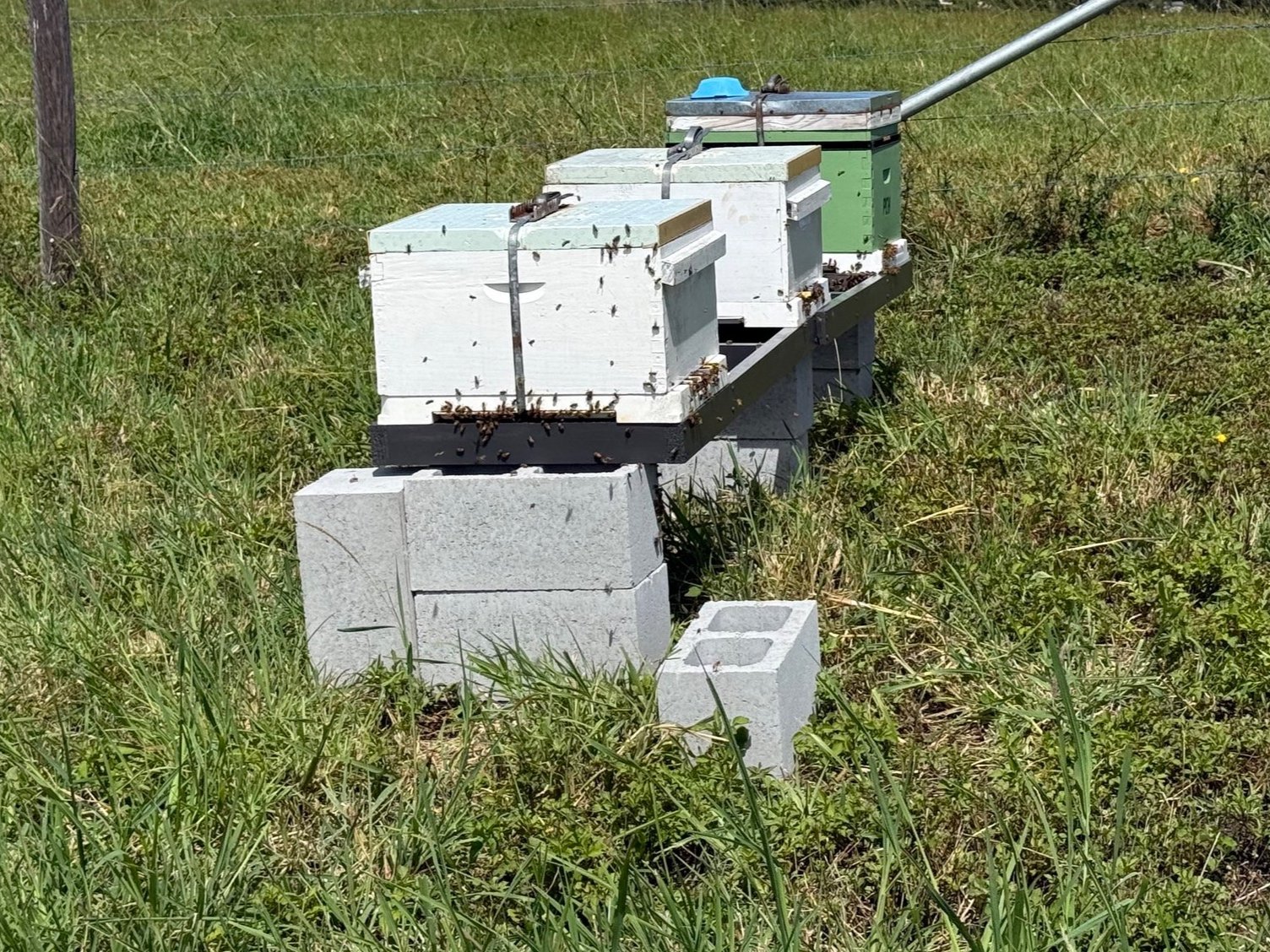
The hives after being opened on site
When the Bees Tell You It’s Time to Move On
Apiary relocation, Small Hive Beetle pressure, and what the data is showing us
Over the past two seasons, one of our apiary sites has been a constant challenge.
What started as a promising location gradually became a high-pressure environment—particularly from Small Hive Beetle (SHB). Despite ongoing management, interventions, and close monitoring, we’ve seen repeated setbacks including weak colonies, absconds, and most recently, a confirmed deadout.
What We Found
During our latest inspection, the signs were clear:
Advanced SHB activity and slime-out in one hive
Evidence of absconding behaviour
A weakened colony showing chalkbrood stress
Robbing activity already underway
This isn’t just a single event—it’s part of a pattern we’ve been tracking over time.
And that’s the key point.
Listening to the Data (Not Just the Bees)
One of the biggest advantages we have now is access to continuous hive monitoring through BeeStar sensors.
These sensors have been quietly building a picture in the background:
Gradual decline signals before failure
Increased stress indicators leading into deadouts
“Red” flagged hives correlating strongly with real-world outcomes
In this most recent case, the hive had already been flagged as critical before inspection confirmed a full collapse.
That alignment between data and physical inspection is incredibly important—it validates that early warning systems are working.
Why We’re Moving the Apiary
At some point, good beekeeping means making the hard call.
We’ve decided to fully relocate all hives from this site.
Not one or two. All of them.
Because partial moves often leave you fighting the same environmental pressures:
Persistent SHB load in the soil
Ongoing reinfestation pressure
Colony stress that never fully resets
Instead, we’re consolidating at McLeans Ridges, where:
Colonies are currently thriving
SHB pressure is noticeably lower
Monitoring data is consistently stable
Hive strength is building, not declining
Strengthening Before the Move
We’re not just picking up boxes and leaving.
We’ve already started:
Removing honey supers from weaker colonies
Refocusing colonies on brood and population strength
Reducing internal space to improve defence
Supporting colonies to rebuild before relocation
Strong colonies handle SHB. Weak ones don’t.
BeeStar Update – What We’re Seeing
This period has been one of the clearest real-world validations of hive monitoring we’ve experienced.
At our stronger apiary:
Sensors are stable
Colonies are building consistently
No abnormal alerts
At the problem site:
Multiple warning signals appeared before visible collapse
Deadout confirmed after “red” status
Patterns repeated across hives
This reinforces something we strongly believe:
Monitoring doesn’t replace inspections—but it tells you where to look, and when to act.
Where This Is Leading
Experiences like this are shaping more than just how we manage our apiaries—they’re influencing what we’re building behind the scenes.
Over time, we’ve been working on a project called HiveCast AI.
It’s important to say—this isn’t an in-hive monitoring solution.
We’re not trying to replace tools like BeeStar, and we’re not trying to compete with sensors inside the hive.
Instead, HiveCast AI sits as another layer.
A layer focused on helping beekeepers better understand:
The impact of weather
Changing microclimates
Environmental pressure building over time
And how those factors influence what’s happening inside the hive.
It’s about combining:
What we see in the hive
What the environment is doing
What the data is quietly showing
…and turning that into clear, practical guidance when it matters most.
This apiary is a perfect example of why.
We weren’t just reacting to one bad hive—we were seeing a pattern build over time. Pressure increasing. Signals changing. Outcomes repeating.
HiveCast AI is being shaped by exactly these kinds of real-world scenarios.
It’s still evolving, but it’s already influencing the decisions we make—like when to intervene, when to reduce space, and in this case, when it’s time to walk away from a site entirely.
Lessons for Beekeepers
If there’s one takeaway from this experience, it’s this:
Don’t ignore repeated setbacks at a site
One dead hive is a warning—multiple is a pattern
Environment matters just as much as hive management
Data can confirm what your gut is already telling you
And sometimes…
The best thing you can do for your bees is move them.
What’s Next
All colonies will be relocated to McLeans Ridges, where we’ll continue:
Monitoring through BeeStar
Recording outcomes for HiveCast AI research
Sharing real-world case studies with the beekeeping community
This is exactly the kind of real-world learning that continues to shape both Pure Coastal Honey and HiveCast AI.
🌿 Hive Monitoring in Our Apiaries — Supporting Evidence-Guided Beekeeping
At Pure Coastal Honey, we believe strong colonies are built on careful observation, thoughtful timing, and continuous learning.
This week we installed hive monitoring sensors across our Newrybar and McLeans Ridges apiaries as part of our commitment to evidence-guided beekeeping.
This isn’t about replacing traditional skills. It’s about supporting them.
Why We’re Introducing Hive Monitoring
Beekeeping has always relied on hands-on experience. Reading brood patterns, assessing colony strength, checking stores — these are skills that can’t be replaced.
But between inspections, colonies are constantly responding to weather, forage conditions, humidity, and seasonal shifts.
Hive monitoring technology allows us to observe trends without opening the hive unnecessarily. For us, this means:
Reducing disturbance to colonies
Identifying environmental stress patterns earlier
Comparing apiary performance across locations
Refining inspection timing
Supporting better long-term decision-making
Used carefully, smart hive sensors can complement traditional beekeeping — not compete with it.
What This Means for Our Northern Rivers Apiaries
Our apiaries at Newrybar and McLeans Ridges experience different microclimates, rainfall patterns, and forage availability.
By monitoring conditions across both sites, we hope to better understand:
How coastal humidity affects colony behaviour
Seasonal variation between locations
Environmental signals before visible colony changes
Patterns that influence honey production cycles
Every region has its own rhythm. Our goal is to listen more closely to ours.
Evidence-Guided Beekeeping at Pure Coastal Honey
Evidence-guided beekeeping is one of the core pillars of Pure Coastal Honey.
It means:
🐝 Measuring before reacting
📊 Using data to support experience
🌱 Intervening only when needed
📚 Continually learning from our own apiaries
We already apply this approach through mite monitoring, seasonal tracking, permanent NUC support systems, and structured apiary records.
Hive monitoring is simply another tool supporting that philosophy.
Technology With Purpose
No sensor replaces lifting a frame.
No graph replaces beekeeper judgement.
But if technology helps us:
Reduce unnecessary inspections
Better understand our coastal conditions
Support colony resilience
Make calmer, more informed decisions
Then it strengthens what Pure Coastal Honey stands for.
Healthy bees.
Thoughtful management.
Honey shaped by place and season.
Looking Ahead
This is a learning trial, not a shortcut.
Over the coming months, we’ll be reviewing trends, comparing apiaries, and sharing insights as we better understand how this technology supports our colonies.
Pure Coastal Honey will always balance tradition with careful innovation — because better understanding leads to better stewardship.
—
Jamie & Catherine
Pure Coastal Honey
Northern Rivers, NSW
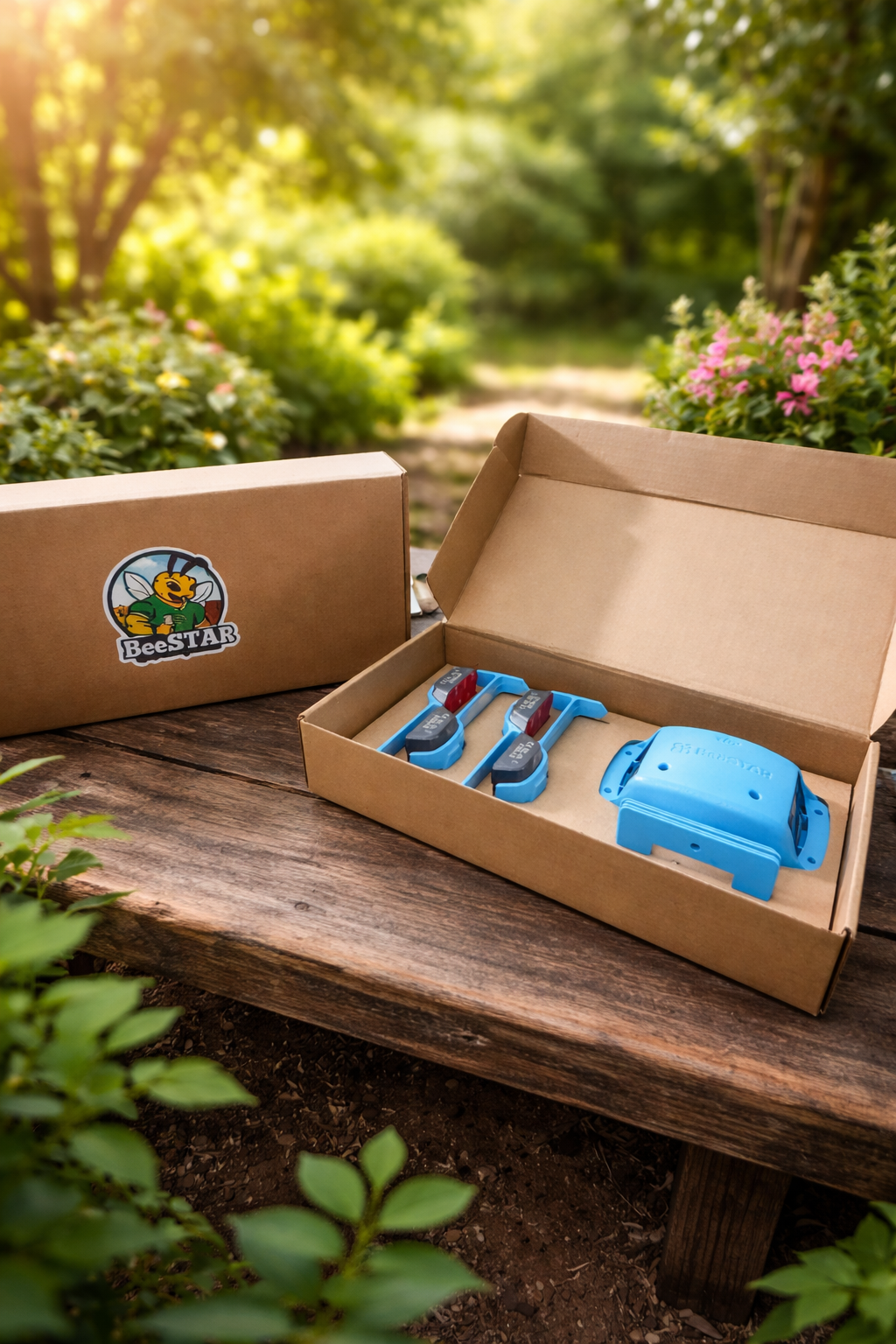
Apiary Update: Healthy Hives and Strong Brood Patterns
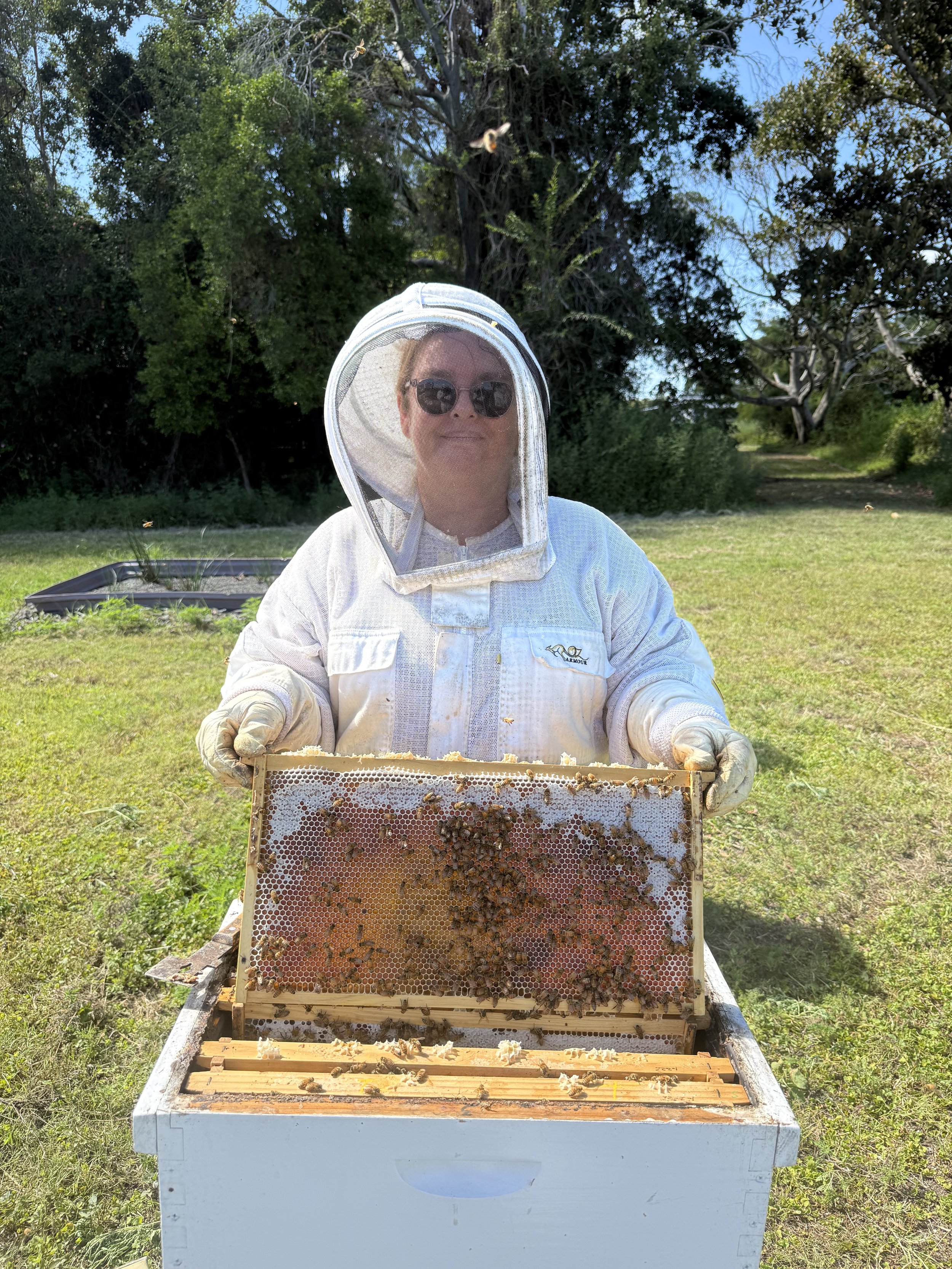
Today was an inspection day across several Pure Coastal Honey apiaries, checking colony health and monitoring how our hives are progressing following recent management work.
We inspected:
our recent split from McLeans Ridges,
the Flow Hive, and
our Sentinel hive, used for ongoing monitoring and data collection.
Regular inspections are an essential part of responsible beekeeping, allowing us to assess colony strength, confirm queen performance, and monitor for pests such as varroa mites.
Monitoring Hive Health
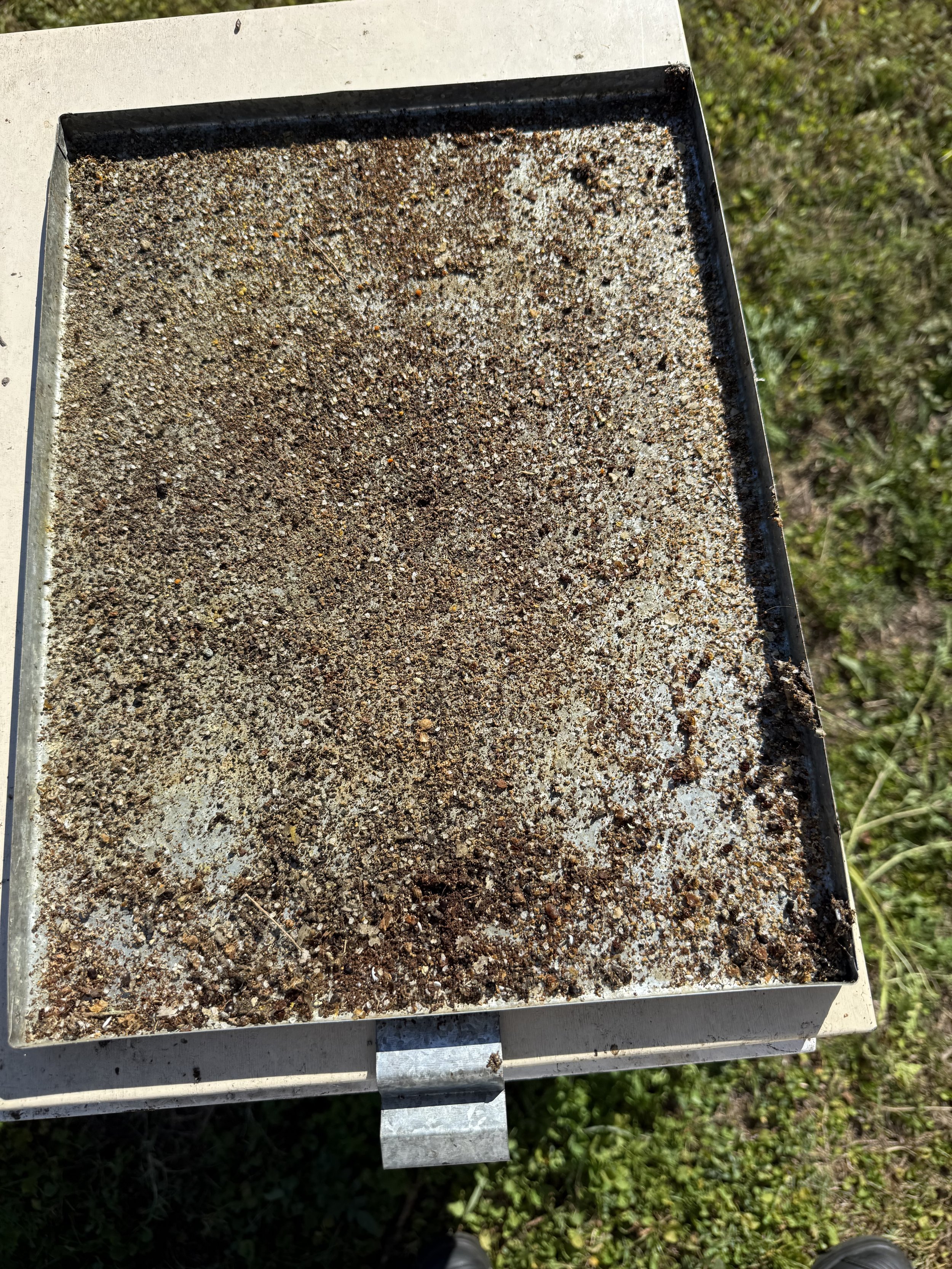
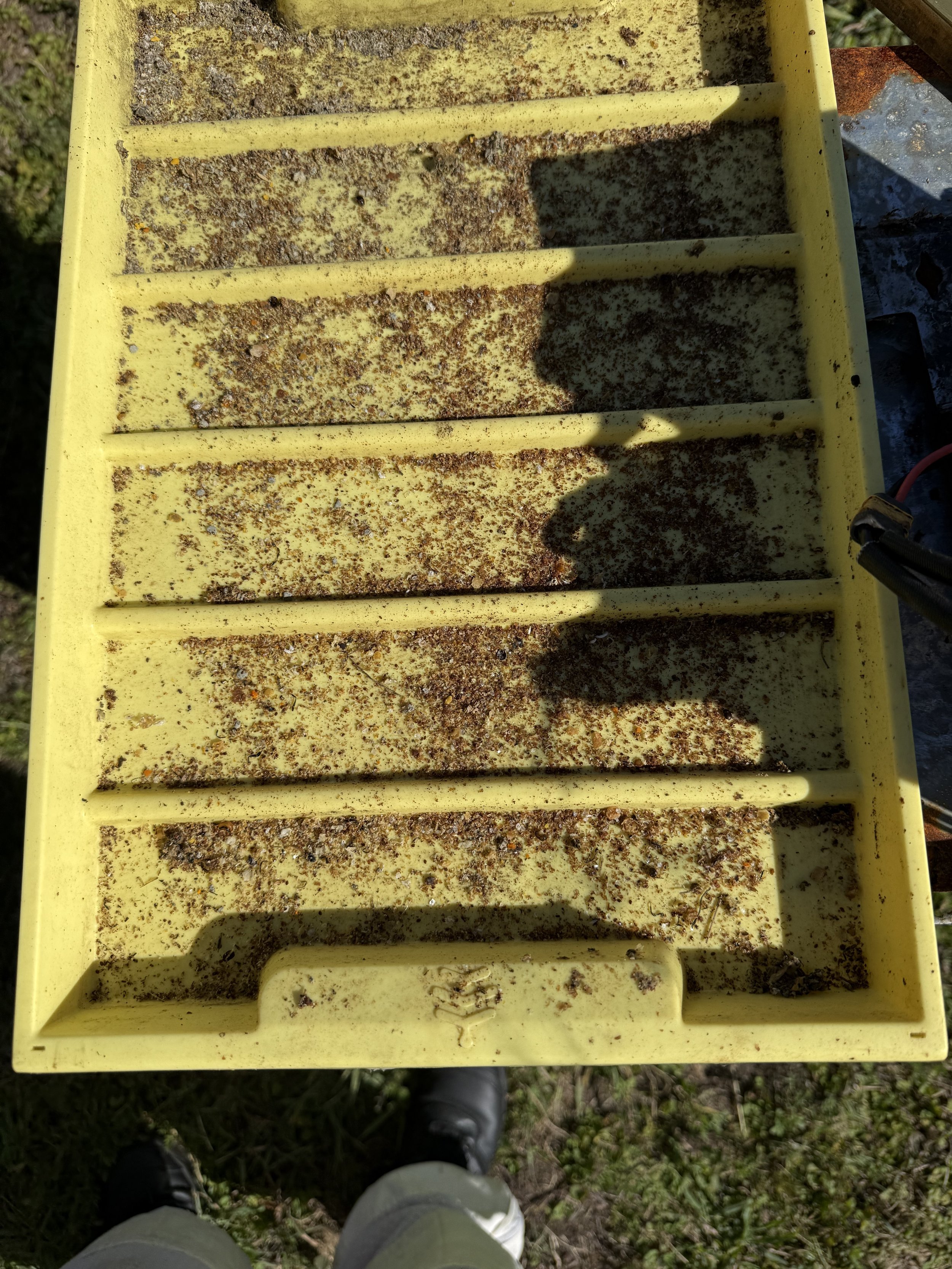
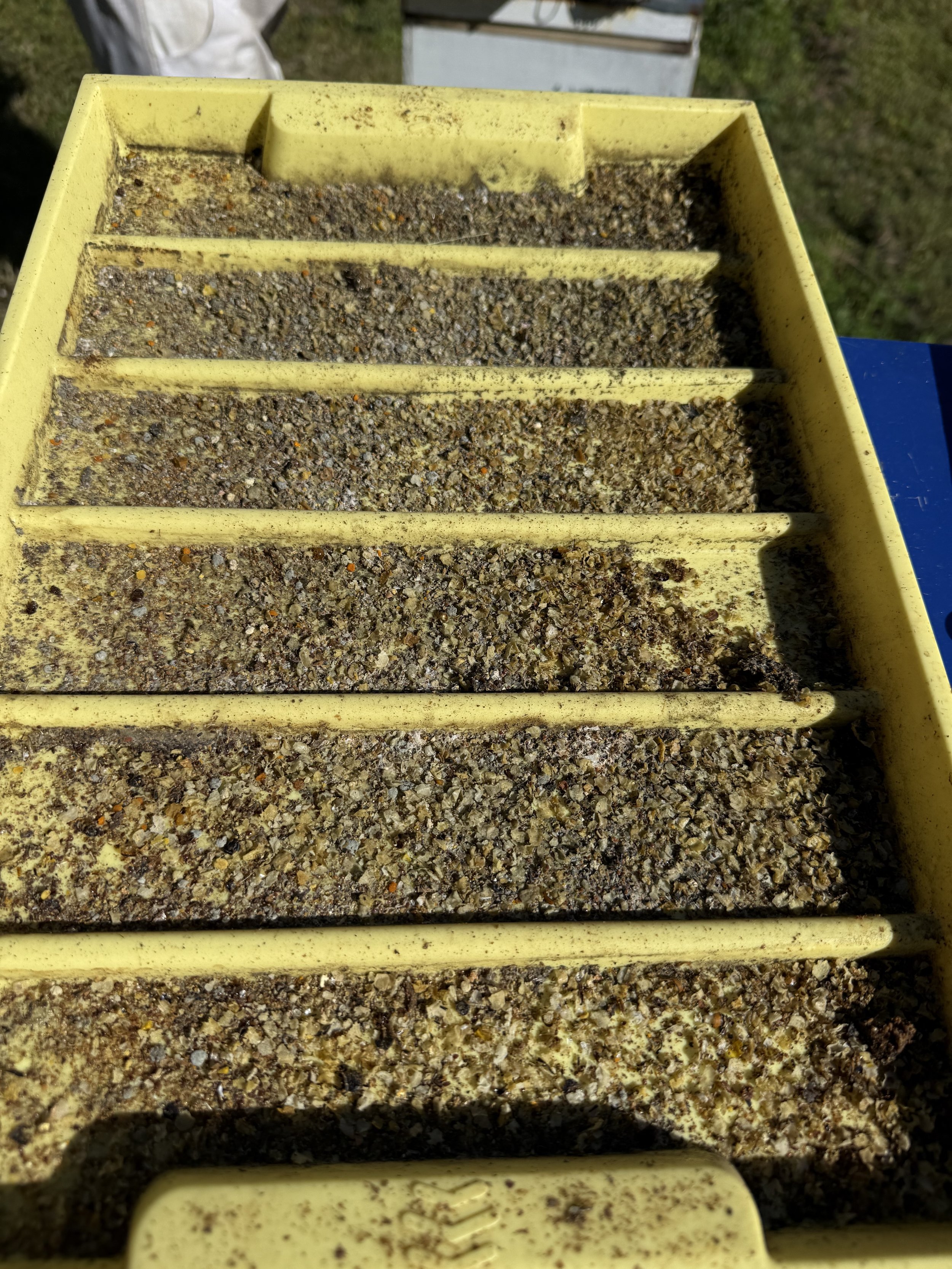
Inspection trays were checked across the apiaries to assess natural mite drop. Monitoring mite levels helps us understand how colonies are responding after treatment and ensures we can act early if conditions change.
Encouragingly, mite drop levels remain low, supporting what we’ve been seeing during hive inspections — strong, active colonies continuing to perform well.
📷 Photo: inspection tray showing monitored mite drop
Strong Queens and Solid Brood
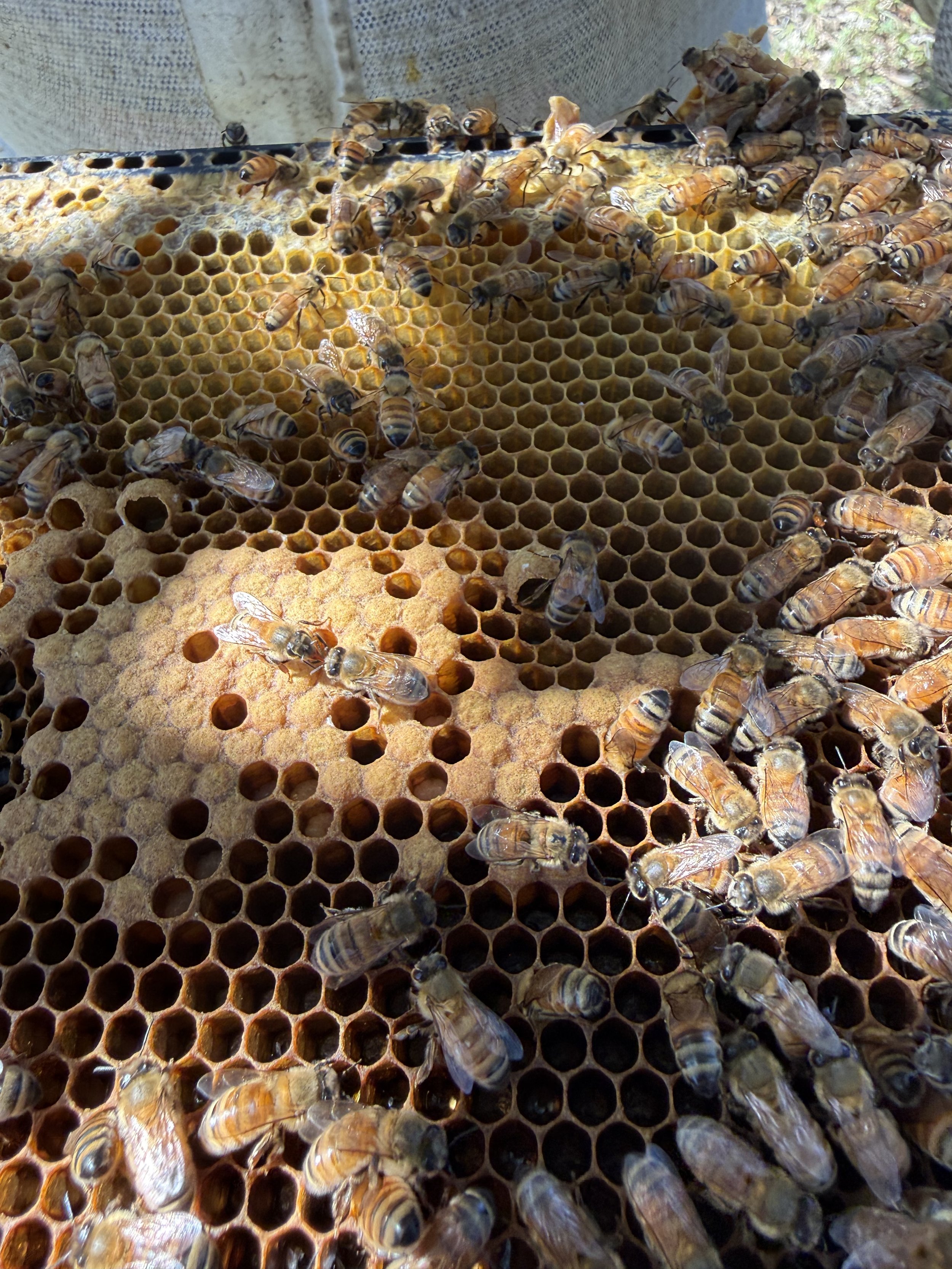
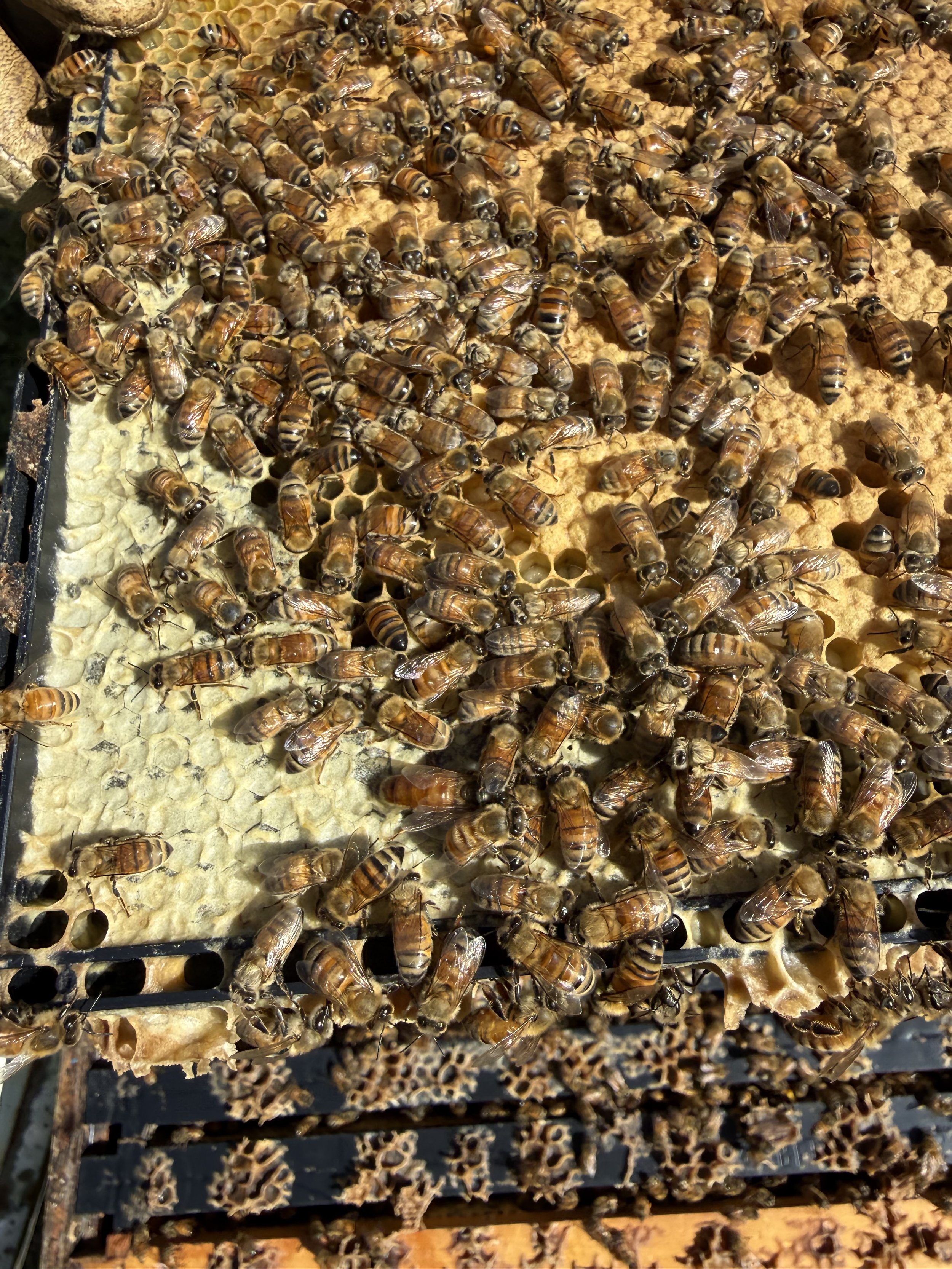
One of the highlights of today’s inspections was confirming healthy, laying queens across the hives. Marked queens were sighted, making it easier to track colony performance and maintain consistent hive management.
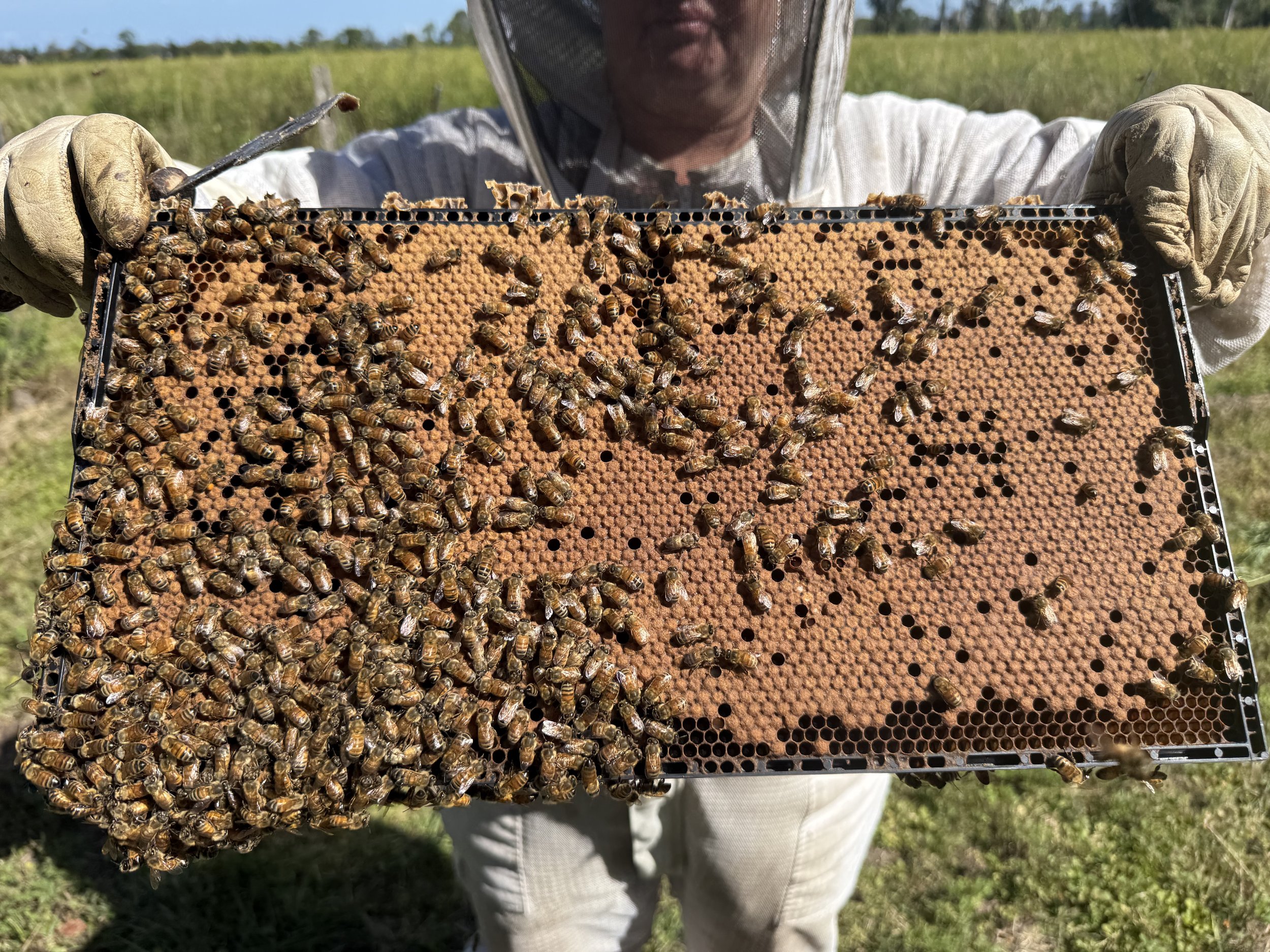
We observed solid brood patterns, a key indicator of colony health. A consistent brood pattern tells us the queen is laying well and that nurse bees are maintaining stable conditions inside the hive.
📷 Photo: marked queen during inspection
📷 Photo: solid brood pattern
Strong brood today means strong field bees in the weeks ahead — an important sign as colonies continue building strength.
🐝 A Tall, Working Hive
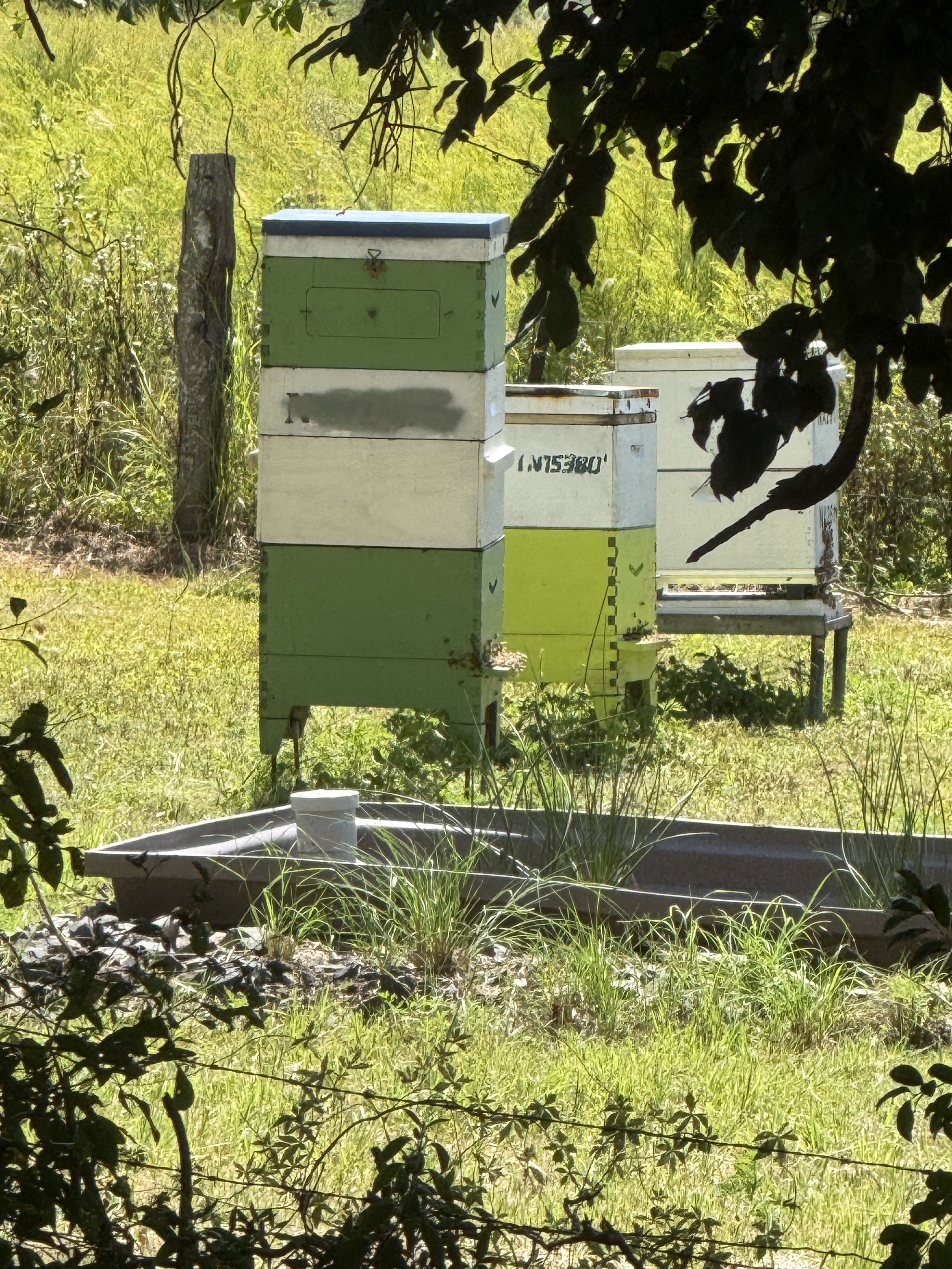
One of today’s inspections included our Flow Hive, currently running a full setup with a brood box, an ideal super, and a Flow honey super.
As colonies grow stronger through the season, additional space is added to support both brood development and honey storage. The brood box is where the queen lays eggs and new bees are raised, while the supers above allow bees to store surplus honey.
This taller configuration reflects a healthy, expanding colony with enough population to manage and utilise the available space effectively.
📷 Photo: Flow Hive showing brood box, ideal super, full deep super and Flow super during inspection
For many people, it’s surprising to see just how large a productive hive can become — but this space helps reduce crowding, supports colony health, and allows bees to store honey naturally as nectar flows
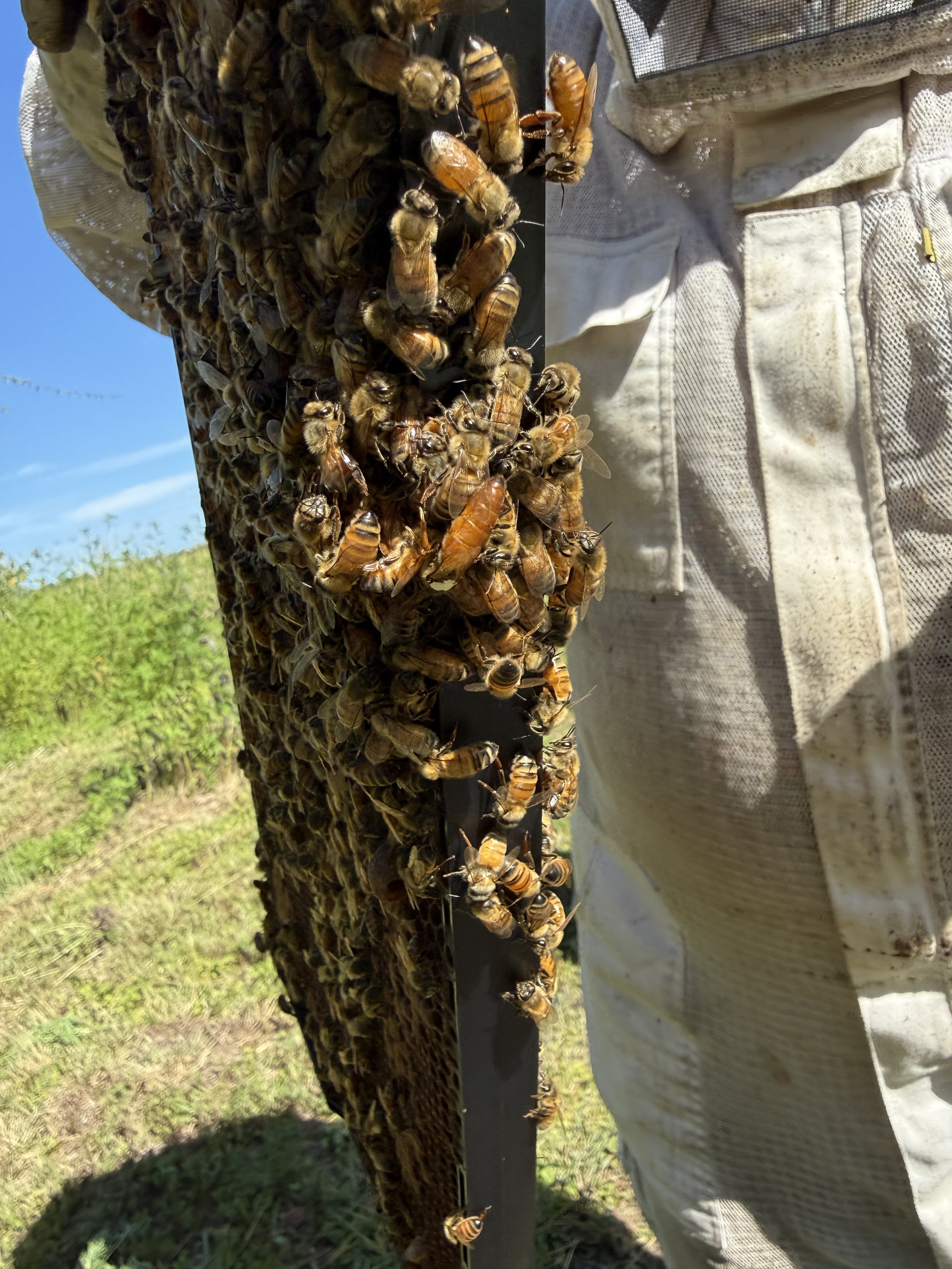
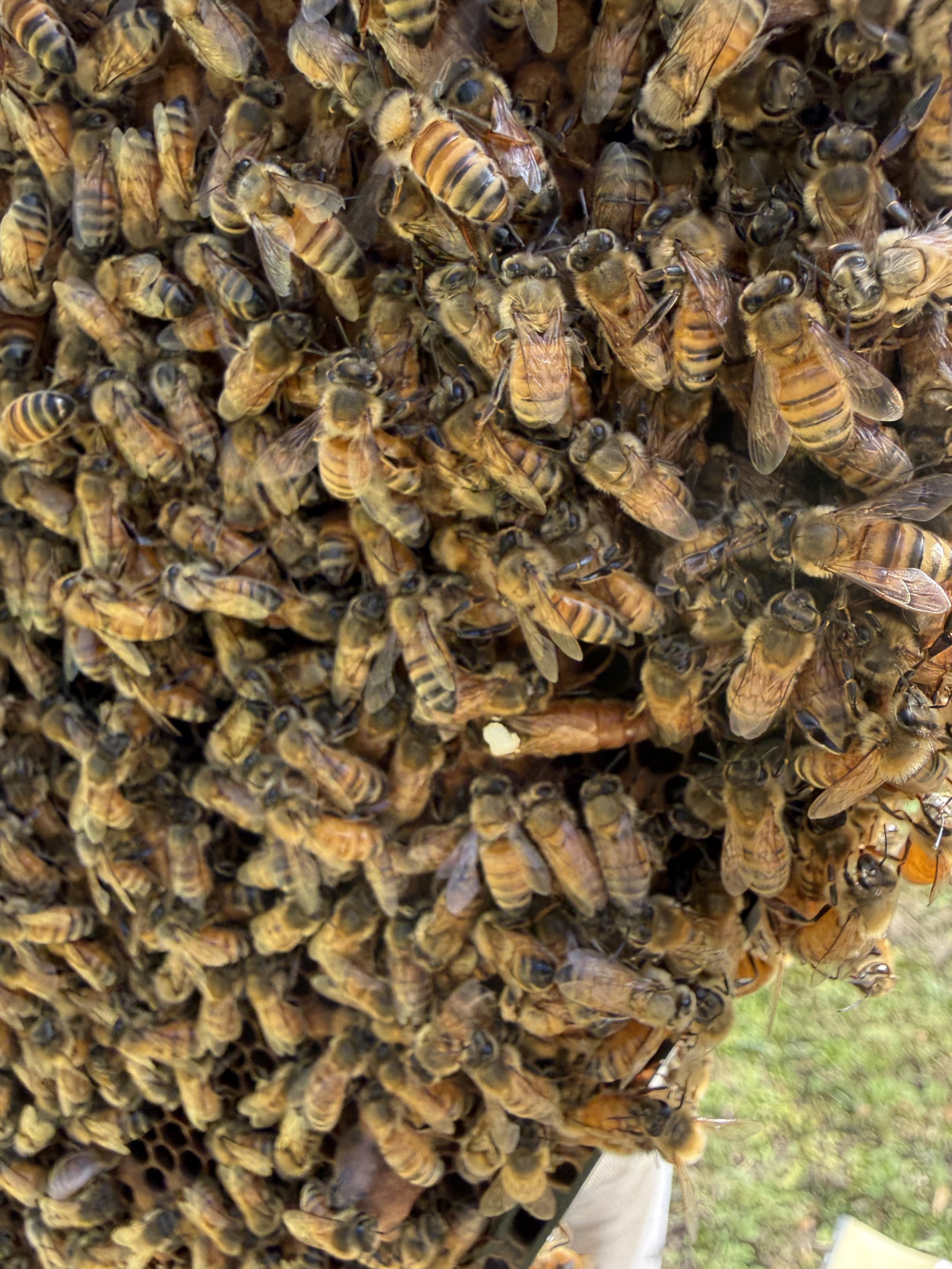
Apiary Update — Moving Hives, Monitoring Health & Growing Stronger
Today was a solid day in the apiary — the kind of work that quietly builds the strength of future seasons.
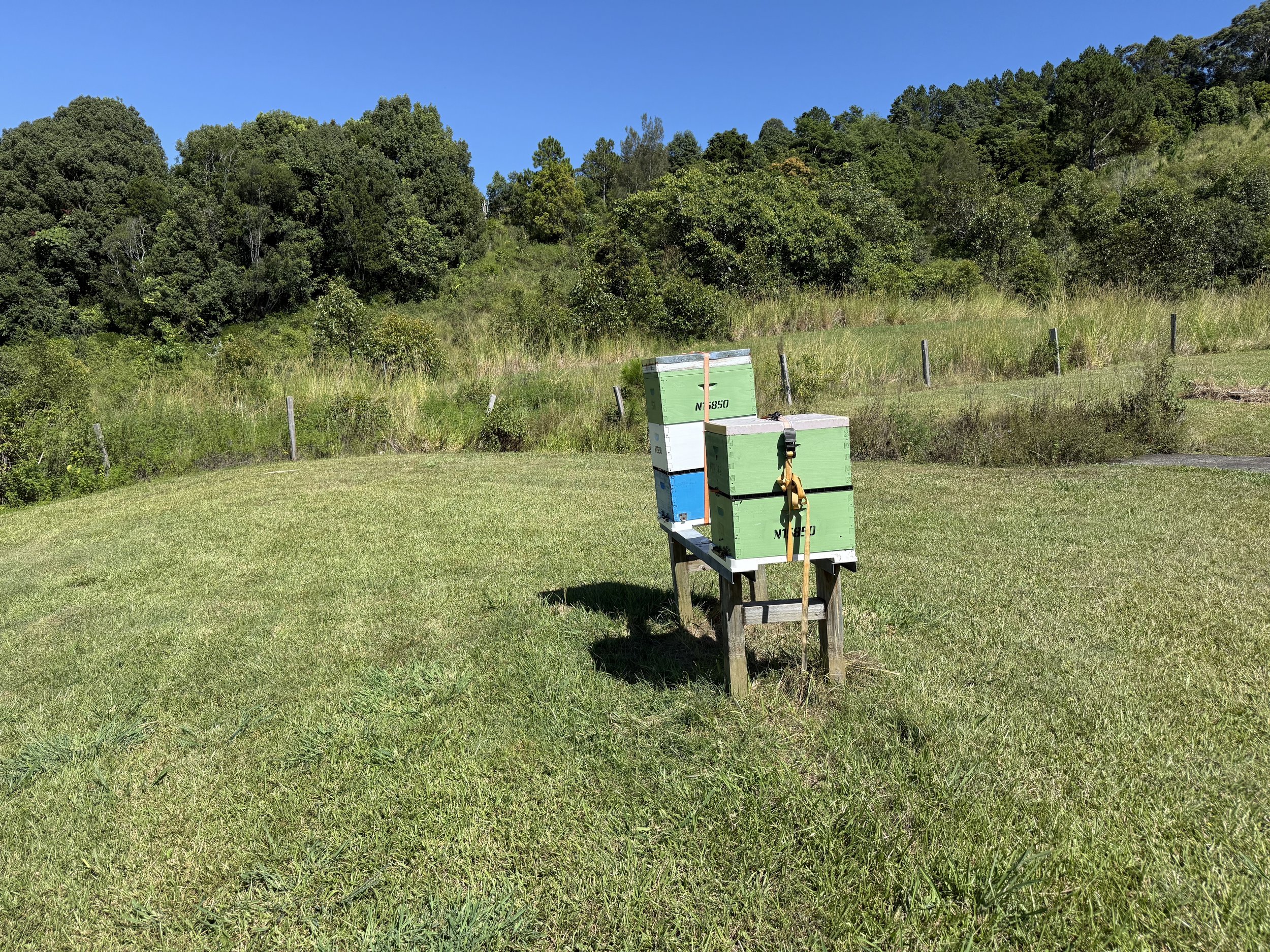
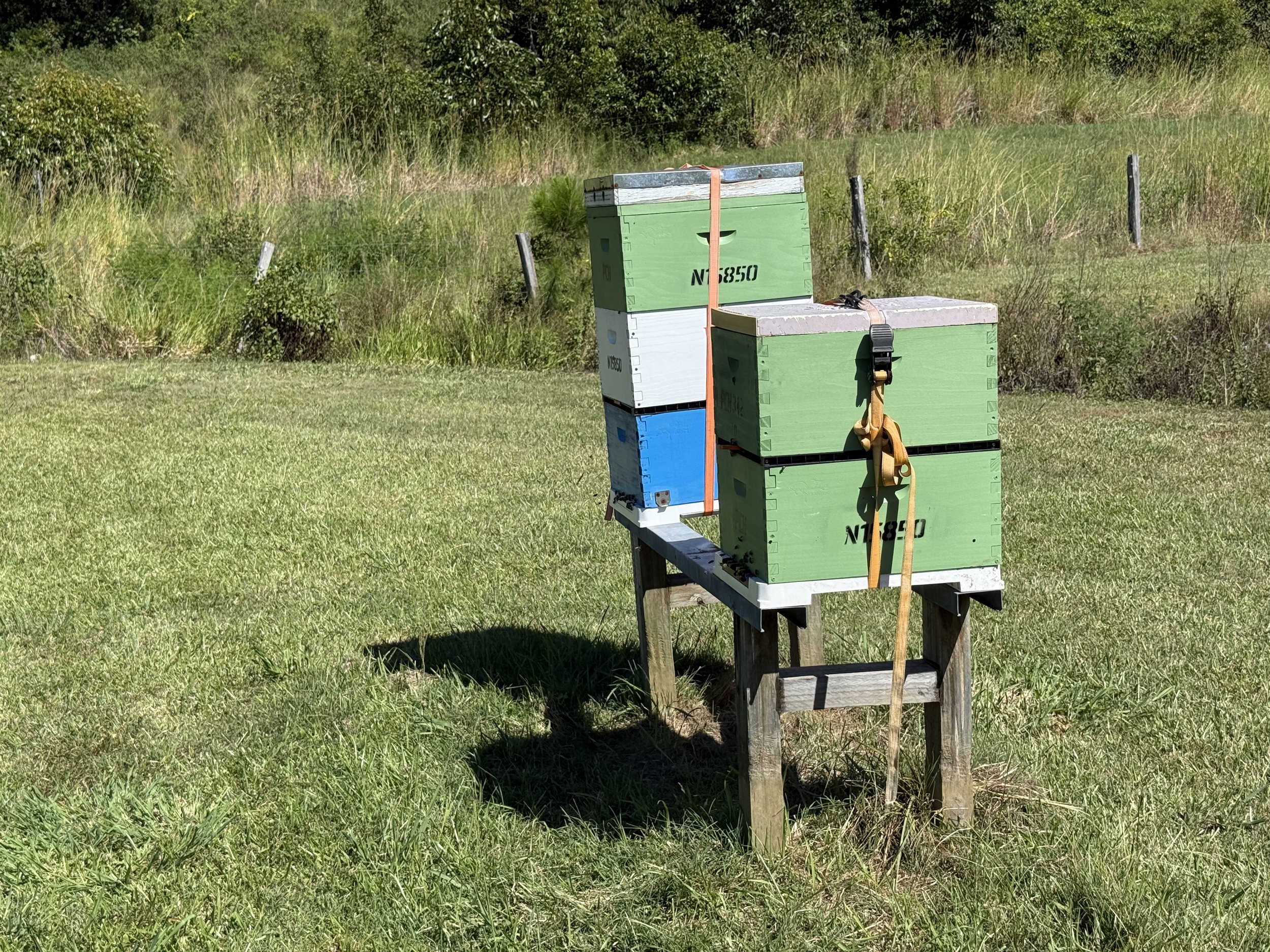
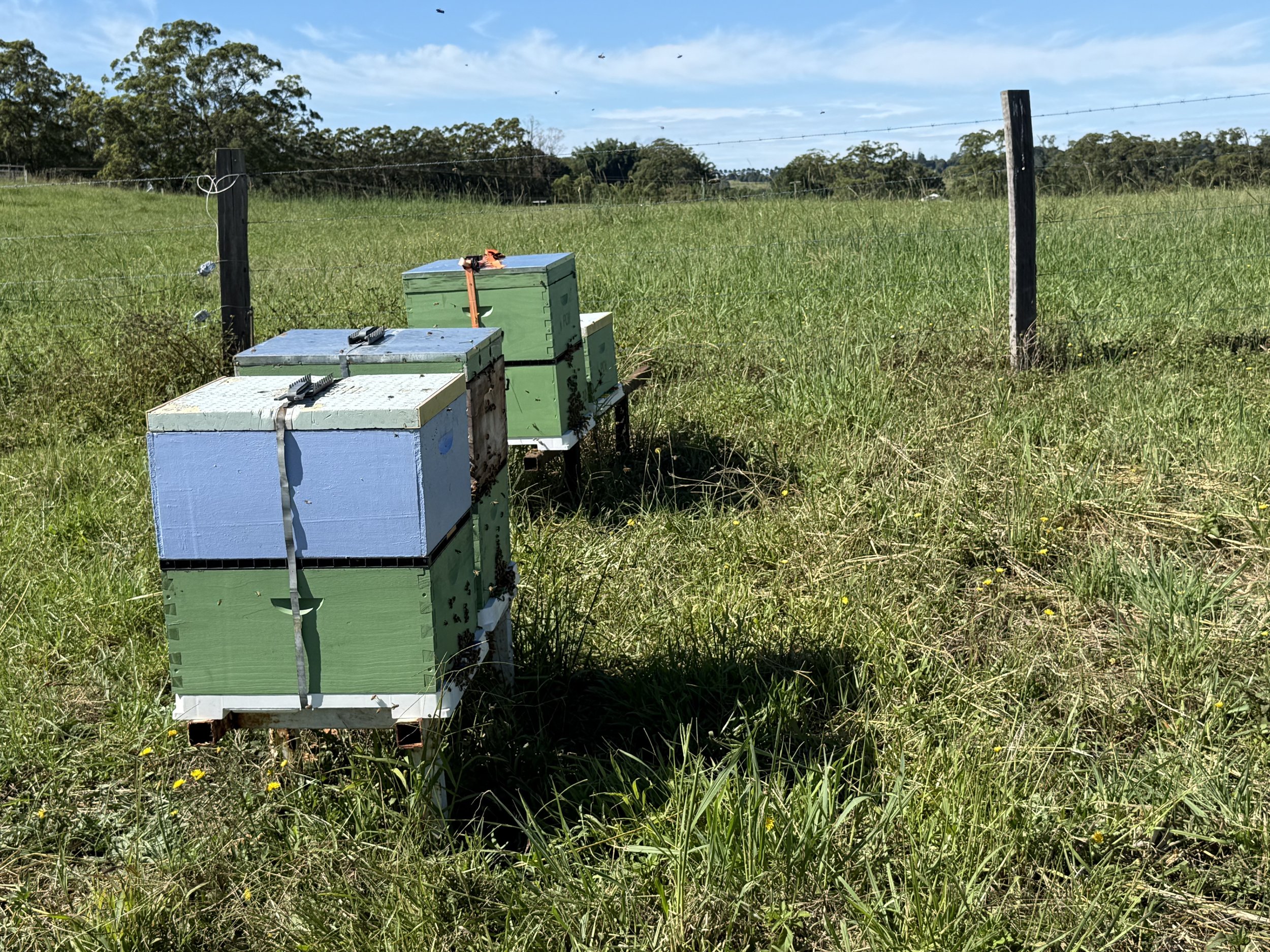
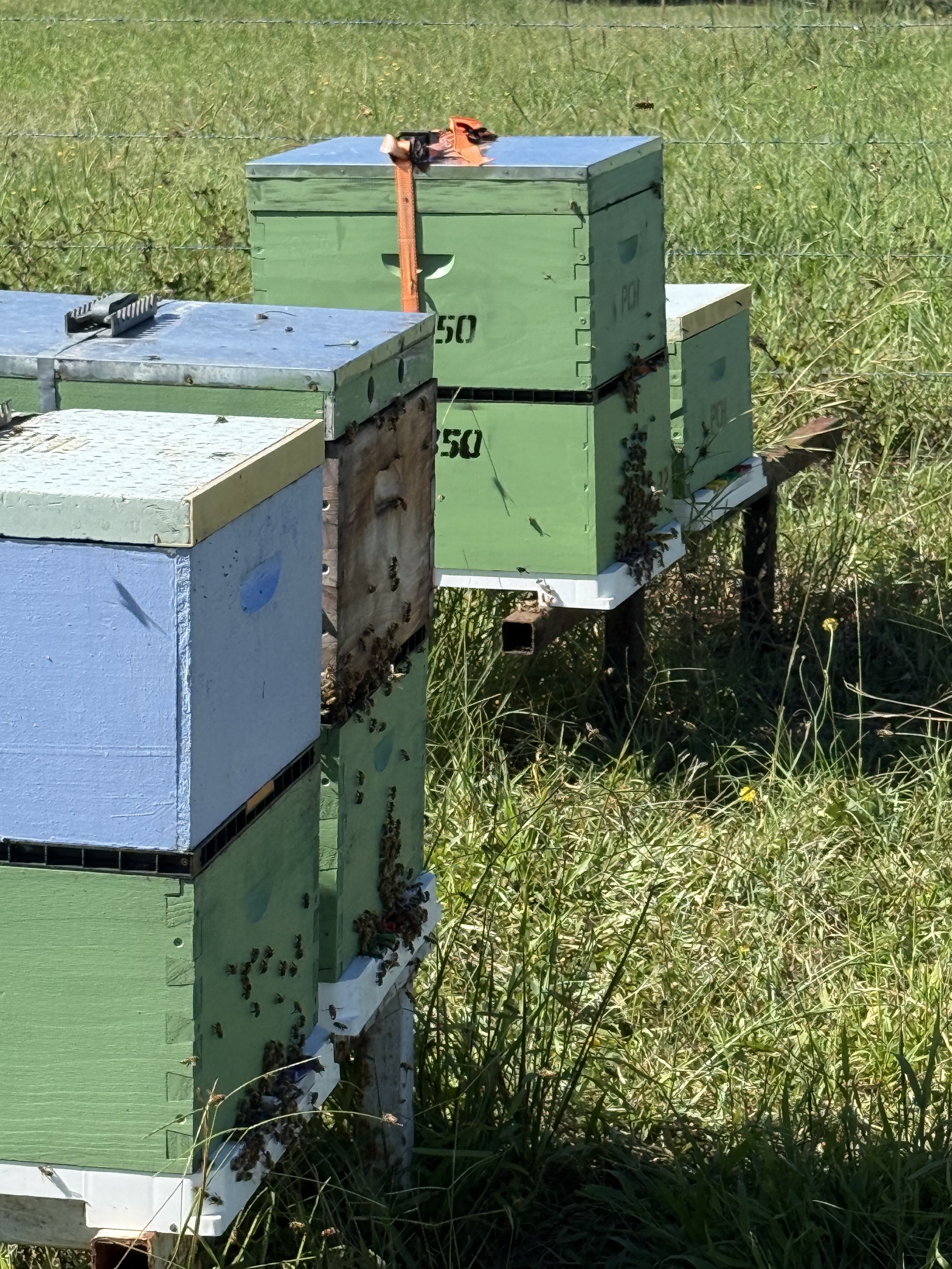
We moved one hive from our Codrington site across to McLeans Ridges, bringing that apiary up to four colonies. Keeping apiaries balanced helps colonies make better use of local forage and allows us to manage hive health more closely across our coastal locations.
While onsite, alcohol washes were carried out at both Newrybar and McLeans Ridges as part of our regular monitoring routine.
Encouragingly, both apiaries returned a zero mite count, which is always reassuring to see following treatment periods. Regular monitoring gives us confidence that colonies are healthy and continuing to recover well.
We also took a split from one of the stronger McLeans Ridges colonies to gradually increase hive numbers. Splitting strong colonies helps reduce swarming pressure while building future production hives.
Beekeeping is often a series of small decisions made week by week — moving colonies, checking health, and supporting growth at the right time.
Looking ahead, we’ll soon be trialling the Beestar hive monitoring system across our remote apiaries.
The goal is simple: better insight into colony conditions between inspections, helping us respond faster to changes in temperature, humidity, and hive activity without disturbing the bees.
Technology will never replace hands-on inspections, but tools like this may help us care for colonies more proactively — something we’re excited to explore and share as we learn.
Every strong hive today becomes future pollination, future honey, and a more resilient apiary tomorrow.
Apiary locations: Codrington • McLeans Ridges • Newrybar
Adding Technology to Our Varroa Management Plan
Over the past season, beekeeping in NSW has changed dramatically.
Varroa is no longer “over there” — it’s here, established, and evolving. With confirmed pyrethroid resistance now detected in some NSW apiaries, the pressure on beekeepers is increasing. For those of us running standing hives in coastal environments, the combination of varroa pressure and Small Hive Beetle (SHB) can be brutal.
We’ve experienced that firsthand.
The Toll of Dead-Outs
There’s something people don’t talk about enough — the emotional toll.
Opening a hive and finding a dead-out isn’t just a financial loss. It’s a colony that was building, foraging, raising brood. It’s time, care, and responsibility. When varroa and SHB combine, collapse can happen quickly.
It breaks us every time.
As beekeepers, we don’t take losses lightly. We analyse, reflect, adjust — and try again.
Resistance Changes the Game
Recent confirmation of pyrethroid resistance in NSW changes how we think about treatment rotations. Chemicals like Bayvarol and Apistan have been important tools, but resistance means we cannot rely on any single product or approach.
Integrated Pest Management (IPM) is no longer optional — it’s essential.
That means:
Monitoring
Rotating treatments correctly
Avoiding under-dosing
Removing strips on time
Watching for reinfestation
Being honest about what’s working and what isn’t
Transparency matters.
Why We’ve Added Hive Monitoring
This season we’ve decided to trial hive monitoring technology using Beestar across two of our remote apiaries.
This isn’t about replacing inspections.
It’s about reducing blind spots.
The goal is simple:
Monitor hive weight trends
Track temperature stability
Watch for sudden changes that may indicate stress
Identify potential swarm or collapse patterns earlier
Support our inspection decisions with real data
We travel weekly between Codrington, McLeans Ridges and Newrybar to inspect hives. As we expand, that becomes harder to manage manually. Monitoring allows us to see patterns between visits.
The data stays ours.
We’ll analyse it, learn from it, and share what we can publicly.
Technology Is Not a Silver Bullet
Let’s be clear — no sensor kills mites.
Monitoring does not replace:
Alcohol washes
Drone brood checks
Timely treatments
Strong hive management
But it may help us detect:
Brood temperature instability
Rapid population decline
Queenless Hives
Hives preparing to swarm
If we can catch stress earlier, we can act earlier.
And in a varroa environment, time matters.
The Future: Full Product Traceability
One of our long-term goals at Pure Coastal Honey is full traceability across every product line.
Not just batch numbers.
Not just “packed in Australia.”
We want to be able to trace a jar of honey right back to:
The apiary it came from
The specific hives that produced it
The season it was harvested
The treatment status at the time
The forage conditions during flow
With hive monitoring technology, we can take this a step further.
Because Beestar units use GPS location data, we can verify that our monitored hives are located within our registered Australian apiaries. That means we can demonstrate that our honey was produced from standing Australian hives — not blended, not imported, not relocated interstate during flow.
As imported honey and blended products continue to create confusion in the market, provenance matters more than ever.
Our vision is this:
In the future, customers will be able to:
Scan a code on a jar
See which apiary produced it
View general seasonal notes
Understand the conditions the bees worked in
Not marketing fluff.
Real data.
Why This Matters
Trust in food production is built on transparency.
Beekeeping has changed. Varroa has changed it. Treatment strategies have changed. The economics have changed.
What shouldn’t change is honesty.
We don’t claim to be fully organic — because bees fly 5–10 km and forage wherever they choose. Absolute claims in modern beekeeping are unrealistic.
What we can claim is:
We operate standing hives.
We report mite detections.
We treat responsibly when necessary.
We aim to return to softer strategies when pressure allows.
We are building systems to trace and verify our product.
The industry is evolving.
So are we.
The Bigger Picture
Varroa is not a temporary wave — it is a new baseline.
We can either resist change or adapt with it.
For us, that means combining:
Traditional hive skills
Data-driven monitoring
Full traceability goals
Transparent communication with our customers
Continuous improvement
Our aim is simple:
Keep bees in boxes.
Keep colonies strong.
Keep building trust.
We’ll continue to share what we learn — the wins and the setbacks.
Because transparency builds trust.
— Jamie
Pure Coastal Honey
Codrington / Northern Rivers NSW
When Doing the Right Thing Still Feels Wrong
A hard but necessary step in our hives
In our earlier post about the Varroa Wave, we shared how mite pressure rose suddenly and unevenly across our apiaries, forcing us to adapt in real time. Some hives responded well to brood breaks and organic treatments. Others didn’t.
This is the part of the story we hoped we wouldn’t have to write — but real beekeeping doesn’t always follow the plan.
Over the past fortnight, despite earlier interventions, our final hives experienced re-infestation levels that put their survival at risk. After careful monitoring and mite washes, we made the call to place these hives under a synthetic varroa treatment.
It’s not a decision we’re comfortable with. But it is a responsible one.
Why the Varroa Wave forced our hand
Varroa doesn’t move in neat lines. It surges, collapses, rebounds, and spreads — often from hive to hive that looked stable just weeks earlier.
What we’re seeing now is a secondary wave:
Reinvasion from surrounding hives
Mite numbers climbing faster than organic methods could suppress
Colonies heading toward a point where intervention becomes urgent, not optional
At that stage, doing nothing isn’t natural — it’s neglect.
We keep bees in boxes. That means we don’t get to step back and “let nature decide” when we know the outcome is collapse.
Why this still aligns with our values
Our approach hasn’t changed — only the tools required for this moment have.
Synthetic treatments are not our preference. They are:
A last resort
A temporary measure
Used only when monitoring shows that other methods are no longer enough
Our goal is not to eliminate treatments entirely, but to minimise intervention wherever possible, and to return to organic and mechanical methods once mite pressure stabilises.
Think of this as a reset — not a new direction.
What this means for our honey
This is the question we know many people will ask, so we want to be completely clear.
Honey currently available from Pure Coastal Honey:
Was harvested before these treatments were applied
Comes from hives not under synthetic treatment during harvest
Meets all food safety and withholding requirements
Any hives under synthetic treatment:
Are not producing harvestable honey
Are managed with dedicated treatment supers where required
Will not contribute honey until all withholding periods are complete and the hive is cleared
In short:
Our honey remains pure, local, and responsibly produced.
Looking forward, not backing down
The Varroa Wave has reminded us that beekeeping is no longer about following a fixed rulebook. It’s about:
Observation
Adaptation
And sometimes making uncomfortable decisions to protect the bees in our care
Once mite pressure eases, our focus will return to:
Brood breaks
Splits
Monitoring-led management
Organic and mechanical treatments wherever possible
This isn’t the end of the story — it’s simply the next chapter.
We’ll keep sharing what we’re seeing, what’s working, and what we’re learning, because transparency matters — especially when things get hard.
— Pure Coastal Honey
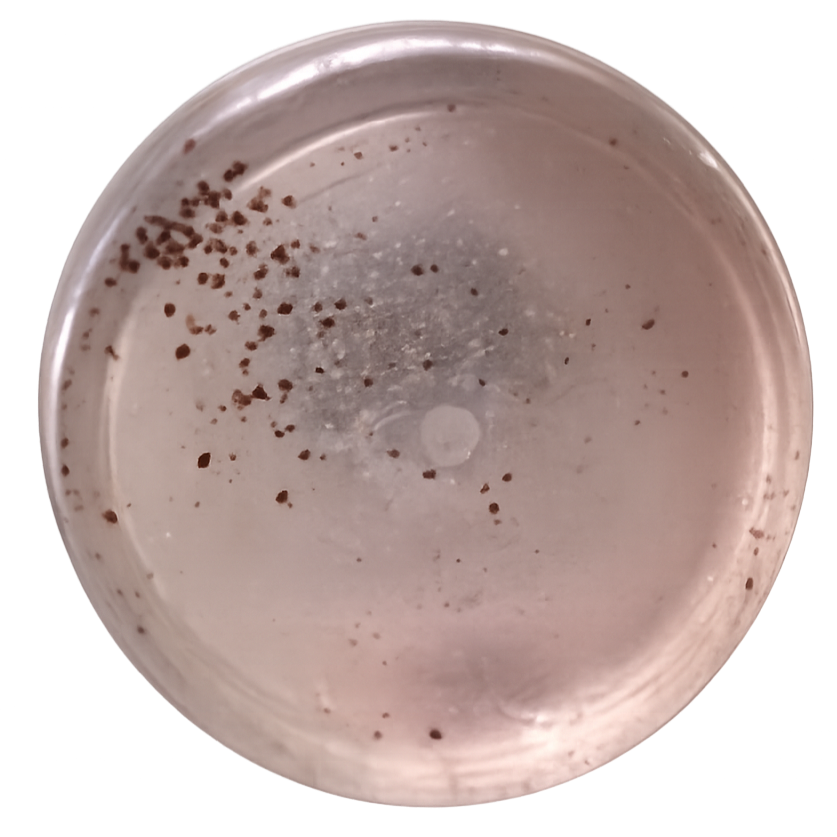
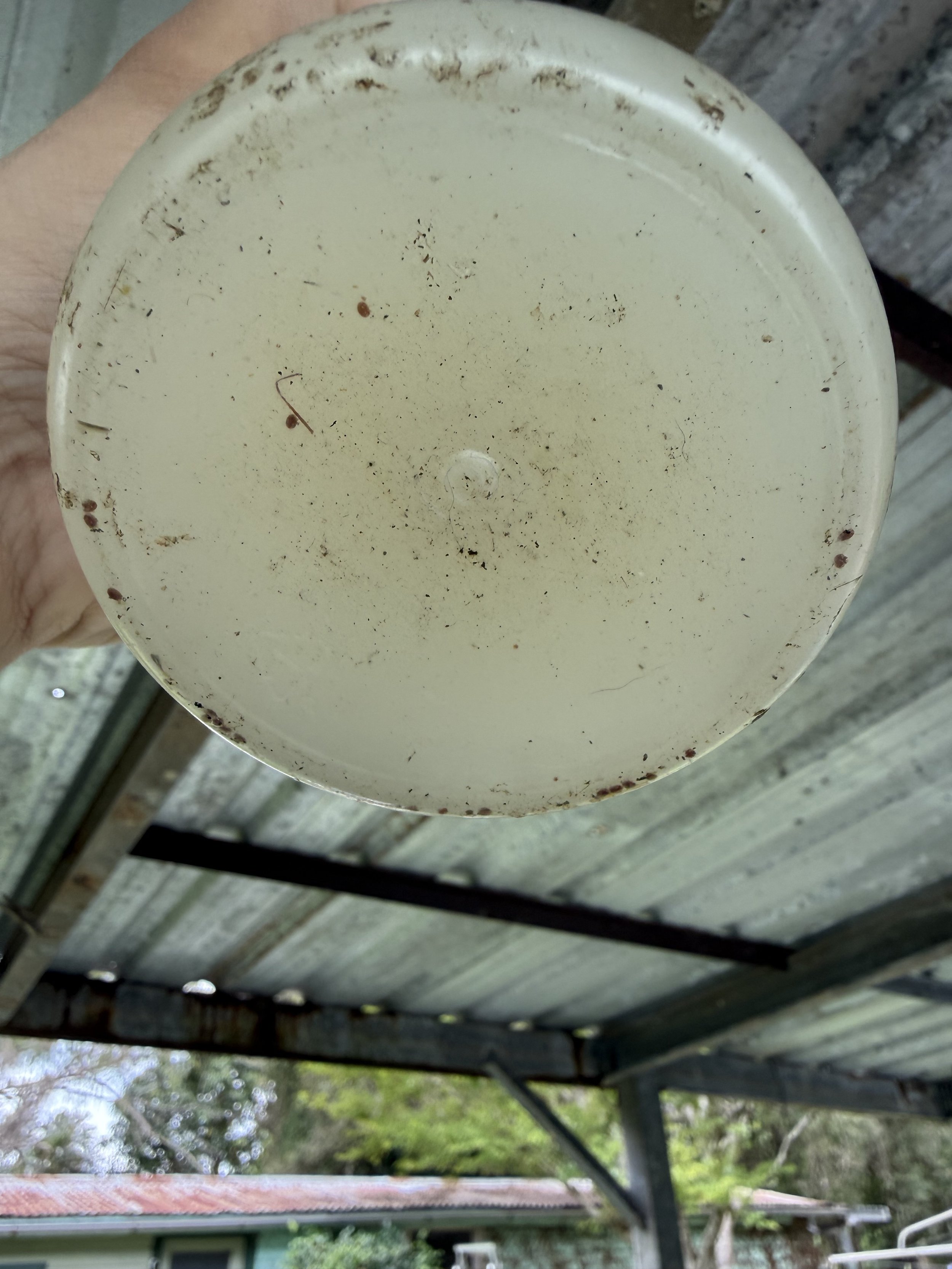
Varroa mites from past wash
What Comes After Varroa? Our Approach in the Hives
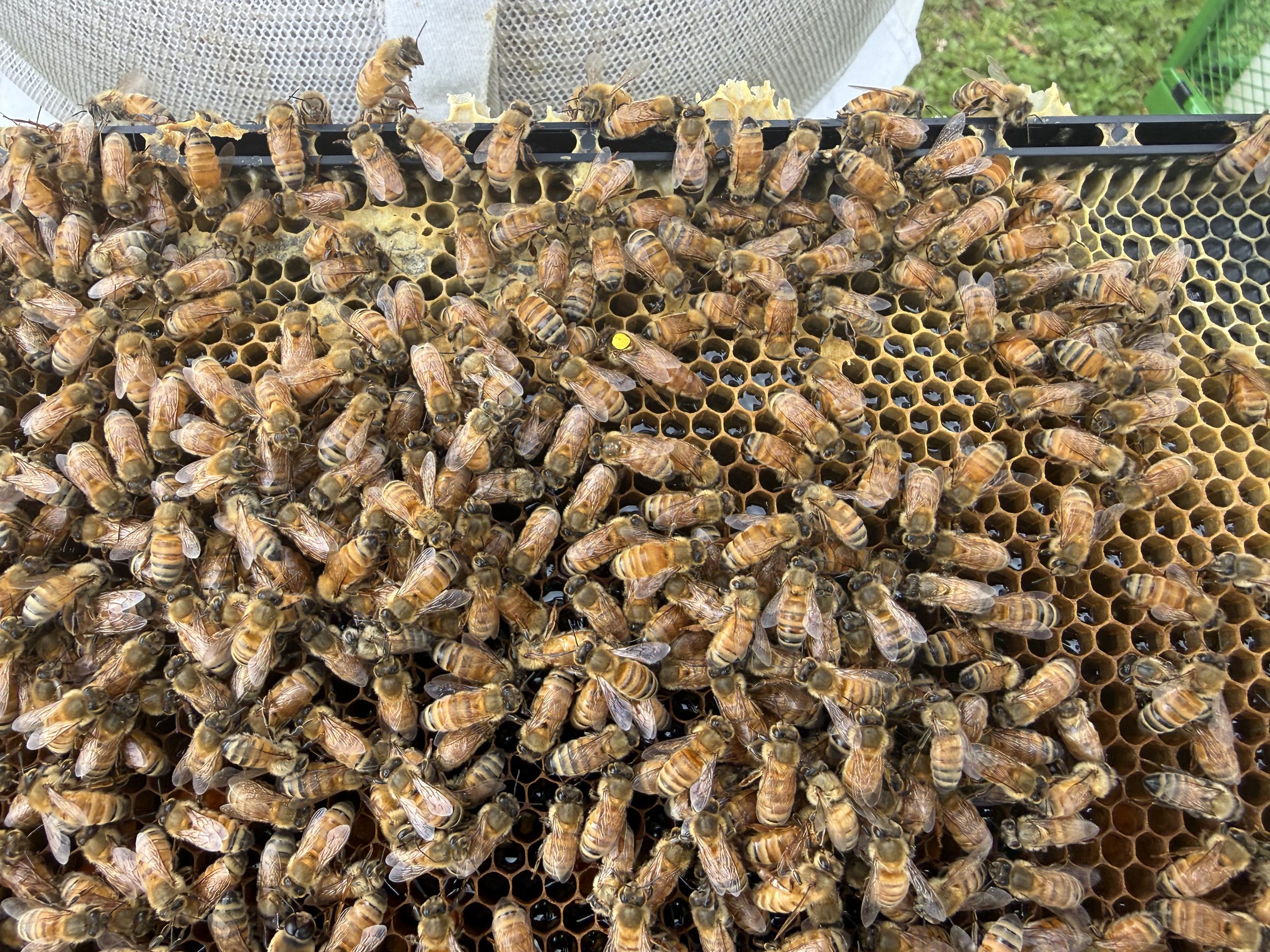
n our last post, we talked about the arrival of varroa and how it’s changed beekeeping across Australia. This post is more practical. It’s about what that looks like on the ground — in our hives — when mite levels reach the point where action is needed.
Recently, a few of our hives reached treatment levels. That’s always a moment where decisions matter. The goal is simple: protect the bees. How you do that depends heavily on conditions at the time.
Right now, we’re in the middle of warm coastal weather. Some common organic varroa treatments carry higher risks to bees and queens when temperatures are high, so we needed an approach that would be effective without adding unnecessary stress to the colonies.
This is where a brood break came into play.
A brood break is a short pause in brood production. Varroa mites reproduce inside developing brood cells, so when there is no brood, the mites lose their ability to multiply. This pause isn’t something we’ve invented — it happens naturally in bee colonies during seasonal slowdowns or when a hive replaces its queen.
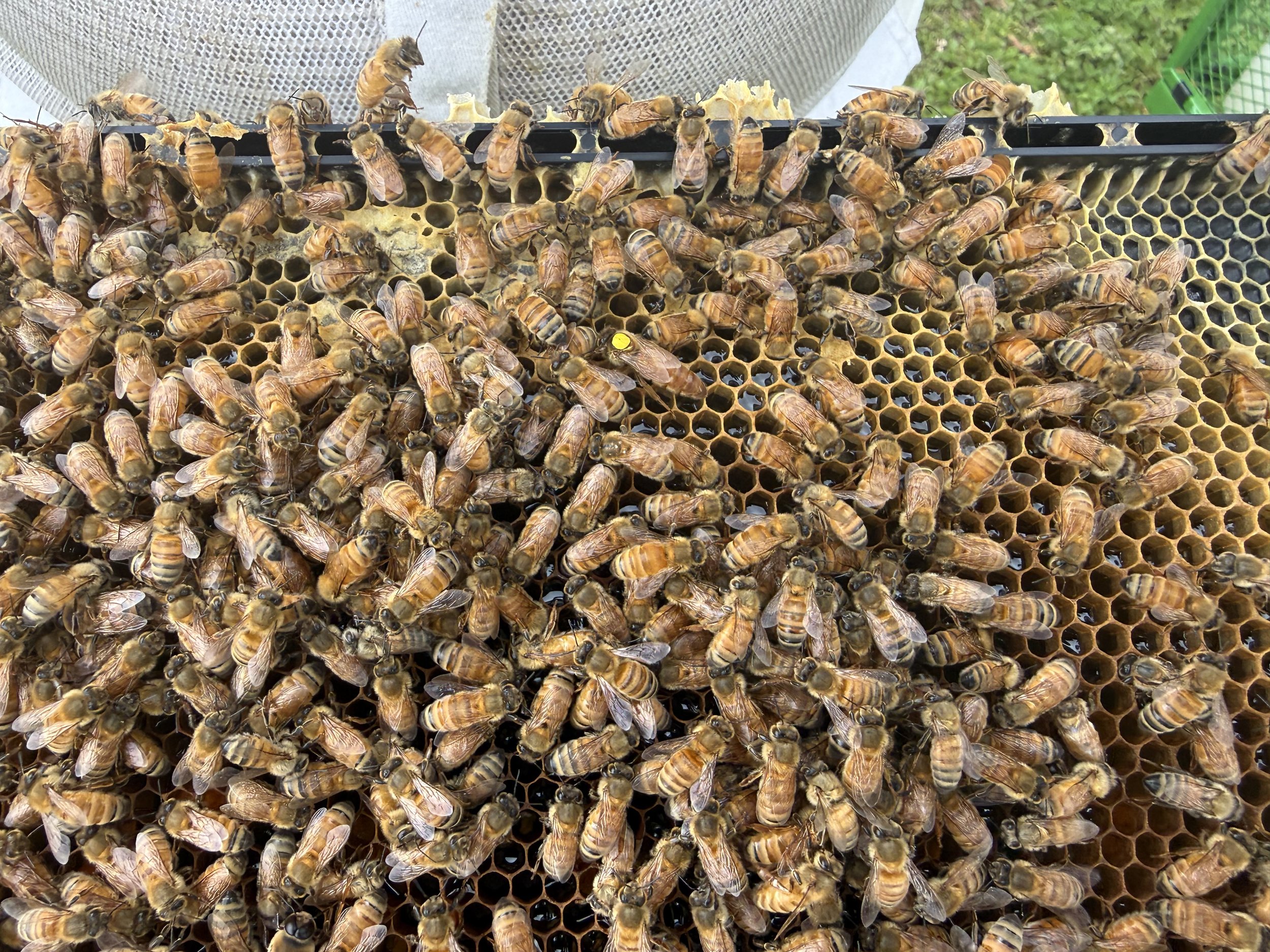
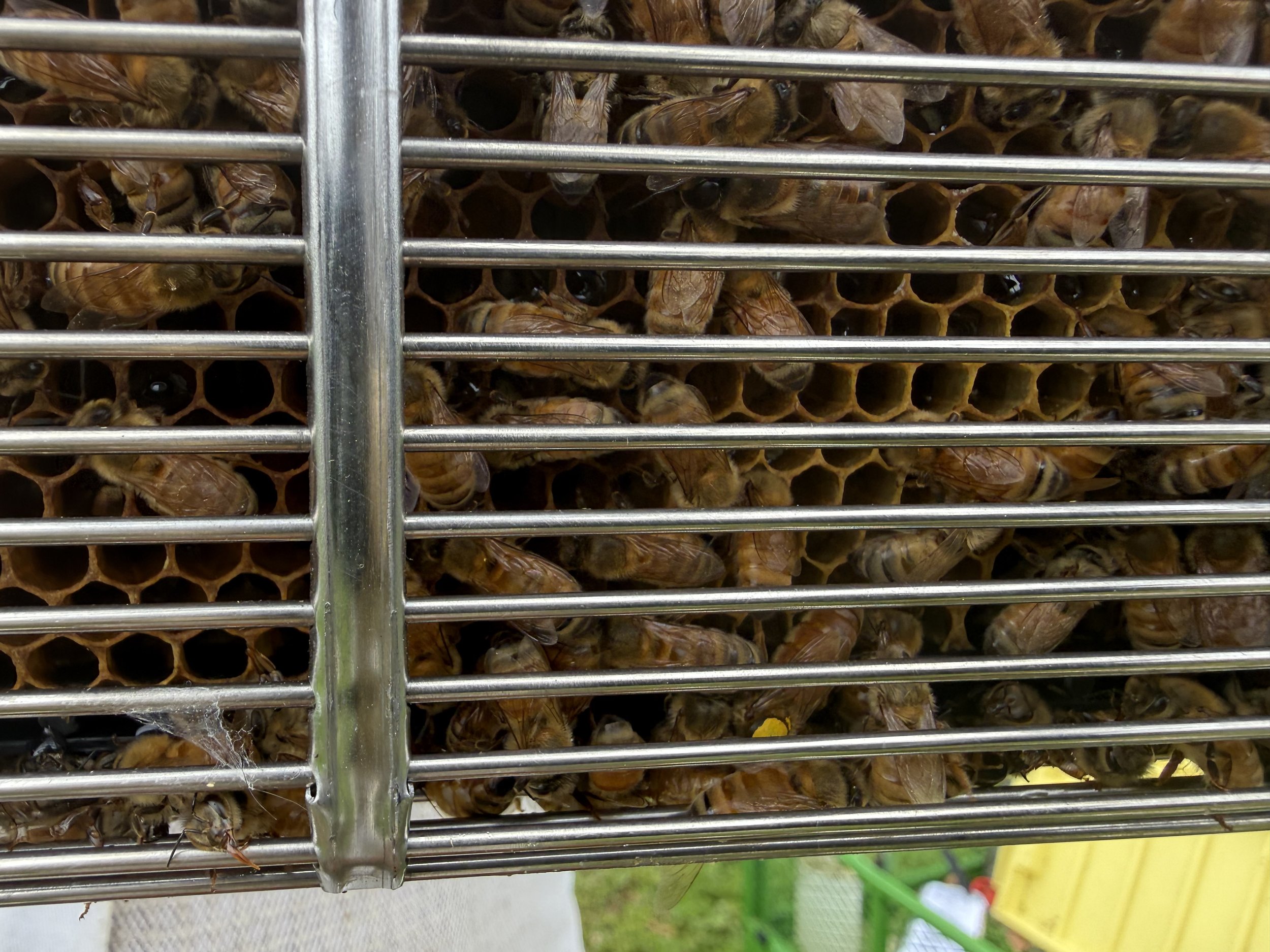
To create this pause, we temporarily prevented the queen from laying eggs using a purpose-built cage inside the hive. She remains part of the colony and is cared for by the worker bees. Over the following weeks, existing brood emerges and no new brood is started. The hive becomes temporarily brood-free.
Once the hive reaches this broodless stage, we can treat with oxalic acid, a naturally occurring substance that’s already present in honey. Treating at this point is important — without brood, almost all mites are exposed on adult bees, meaning a single, light treatment is usually effective. The queen is then released and normal brood production resumes.
At the same time, we also performed a split on one of the stronger hives. Splitting reduces mite pressure by interrupting brood cycles and spreading bees across colonies, while also allowing us to build up new hives from healthy stock. Like brood breaks, splits are a management tool that works with bee biology rather than against it.
During this period, we also reduced excess space in the hives and removed honey supers where needed. With fewer bees emerging during a brood pause, keeping the hive compact helps the bees defend against pests like small hive beetle and maintain control of their space.
None of these decisions are taken lightly, and none are permanent settings. Varroa management isn’t about finding a single perfect treatment — it’s about responding to conditions as they change: weather, colony strength, pest pressure, and season.
This is what “after varroa” looks like for us. Careful monitoring, measured responses, and choosing methods that balance effectiveness with bee welfare. It’s slower than quick chemical fixes, but it keeps the focus where it belongs — on healthy bees and resilient hives.
Varroa Wave Update:Adapting to Protect Our Bees
Varroa Wave Update
The arrival of varroa has changed beekeeping in Australia in ways many of us never expected. Like beekeepers across the country, we’ve been navigating an intense learning curve while trying to do what matters most—protecting our bees.
Over the past season, our region has experienced a significant varroa pressure wave. During this time, keeping colonies healthy and stable inside managed hives has been increasingly difficult. Bees that once thrived began to decline rapidly, even under close monitoring and intervention.
Treatments We Tried
Our first approach focused on softer and organic-style management options, combined with increased monitoring and hive management. These included:
Increased hive inspections and brood checks
Formic Acid
Oxalic acid vapour treatments
Brood breaks and hive strengthening strategies
Drone brood removal
While these methods can be effective under lower mite pressure, the intensity of the varroa wave meant they were not enough on their own. Despite best efforts, some colonies continued to decline faster than they could recover.
The Reality of the Varroa Wave
One of the hardest parts of this period was watching strong colonies struggle to maintain balance. Varroa doesn’t just weaken bees—it disrupts the entire colony system. During peak pressure, even well-managed hives can reach a tipping point quickly.
This was not a matter of effort or care, but biology and scale. The mite load simply outpaced the control methods available at the time organically.
Making the Switch to Synthetic Treatments
After careful consideration, consultation with other beekeepers, and reviewing available data, we made the decision to introduce registered synthetic treatments where appropriate.
This decision wasn’t taken lightly. However, our responsibility as beekeepers is to reduce suffering and prevent colony collapse. In this context, switching to synthetics was about saving bees, not abandoning values.
All treatments were applied according to label directions and biosecurity requirements, including appropriate honey supers management to ensure food safety and compliance.
What This Means Going Forward
Varroa has made it clear that flexibility and honesty are essential in modern beekeeping. No single approach fits every situation, and adapting management strategies is now part of responsible hive stewardship.
We remain committed to:
Bee health and welfare
Careful, minimal-use treatment strategies
Transparency with our customers and community
Ongoing learning and collaboration with other local beekeepers
Why We Share This
We believe customers deserve honesty about how their honey is produced—especially during challenging times. Beekeeping isn’t static, and neither are the pressures facing bees.
Sharing both the tough seasons and the successful ones is part of building trust and supporting a more resilient beekeeping future.
Varroa has changed the rules, but our commitment to our bees has not.