
When the Bees Tell You It’s Time to Move On (Part 2)
There comes a point in beekeeping where persistence stops being productive—and listening becomes more important.
For us at Pure Coastal Honey, that moment came again at our Newrybar site.
After two challenging seasons battling small hive beetle (SHB) pressure, repeated setbacks, and more recently another round of deadouts, the signs were clear. This wasn’t just a tough patch—it was a pattern.
And patterns in beekeeping matter.
📍 The Final Check
Before making the call to move, we did one last inspection.
The trays told the story before we even cracked the lids.
High numbers of adult beetles
Active larvae present
Colonies under pressure despite intervention
Even after cleaning trays and maintaining strong colonies, the environment itself was working against the bees.
That’s the key lesson here—sometimes it’s not your management.
It’s the site.
🚛 The Move to McLeans Ridges
We made the decision to relocate all viable colonies to our McLeans Ridges apiary—a site that has consistently shown:
Lower SHB pressure
Stronger colony performance
Better overall balance between bees and environment
Before transport, we:
Cleaned all trays thoroughly
Removed as much SHB load as possible
Ensured colonies were secure and stable for the move
This wasn’t just about moving bees—it was about resetting conditions in their favour.
🗓️ Timeline of Events
March 2025 – First varroa detection, management begins (drone trapping → organic rotation)
Late 2025 – Continued SHB pressure builds at Newrybar
January 2026 – Hive losses begin
February 2026 – NUCs introduced, monitoring increases
March 2026 – Intervention applied (reduced space, removed excess comb)
March 2026 – Colonies stabilise, strong populations maintained
March 2026 – Final inspections show ongoing SHB + larvae pressure
March 2026 – Decision made and hives relocated to McLeans Ridges
A Note on HiveCast Thinking (and BeeSTAR on the Ground)
While still in development, this is exactly where our HiveCast AI approach comes into play.
Not as an in-hive monitor—but as another layer helping beekeepers understand:
When conditions are turning against them
What practical steps can reduce pressure
When it might be time to act early… not late
At Newrybar, one of those steps was simple but effective:
👉 Reducing excess space and removing uncovered comb
After following this approach, colony strength improved—and this was clearly reflected in our BeeSTAR monitoring, which continued to show strong (green) hive status.
That’s an important point.
The colonies themselves were not failing.
They were holding on.
But despite strong populations and active foraging, the external pressure from small hive beetle remained consistently high, with trays continuing to show beetles and larvae.
So the decision wasn’t made because the bees were weak—
It was made because the environment was.
At Newrybar, the signals were coming from multiple directions:
On-ground inspections
Tray observations
Monitoring data (showing strength, not collapse)
And that combination told the full story.
This time, we didn’t wait for failure.
⚖️ Success Isn’t Always Staying
In beekeeping, success isn’t always about pushing through.
Sometimes it’s about stepping back and asking:
“Are we giving these bees the best chance to thrive?”
Strong bees can still be in the wrong place.
Moving an apiary isn’t failure.
It’s good management.
🌱 Where To From Here?
The focus now is simple:
Build strength at McLeans Ridges
Reduce stress on colonies
Continue monitoring SHB pressure closely
Apply what we’ve learned moving forward
Because every difficult site leaves behind something valuable—
insight.
🐝 Final Thought
Bees are incredibly good at telling us what they need.
We just have to be willing to listen.
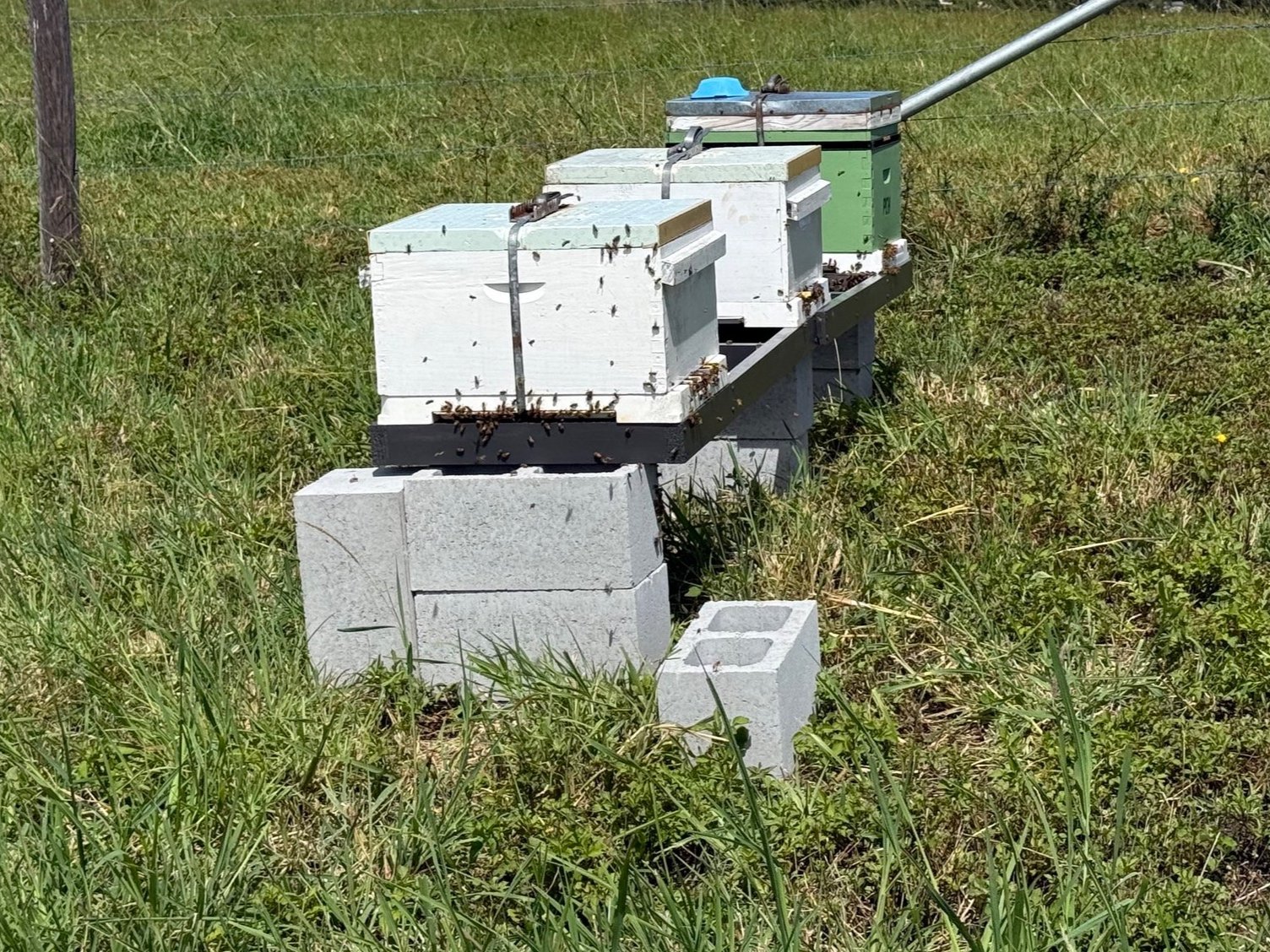
The hives after being opened on site