
When Doing the Right Thing Still Feels Wrong
A hard but necessary step in our hives
In our earlier post about the Varroa Wave, we shared how mite pressure rose suddenly and unevenly across our apiaries, forcing us to adapt in real time. Some hives responded well to brood breaks and organic treatments. Others didn’t.
This is the part of the story we hoped we wouldn’t have to write — but real beekeeping doesn’t always follow the plan.
Over the past fortnight, despite earlier interventions, our final hives experienced re-infestation levels that put their survival at risk. After careful monitoring and mite washes, we made the call to place these hives under a synthetic varroa treatment.
It’s not a decision we’re comfortable with. But it is a responsible one.
Why the Varroa Wave forced our hand
Varroa doesn’t move in neat lines. It surges, collapses, rebounds, and spreads — often from hive to hive that looked stable just weeks earlier.
What we’re seeing now is a secondary wave:
Reinvasion from surrounding hives
Mite numbers climbing faster than organic methods could suppress
Colonies heading toward a point where intervention becomes urgent, not optional
At that stage, doing nothing isn’t natural — it’s neglect.
We keep bees in boxes. That means we don’t get to step back and “let nature decide” when we know the outcome is collapse.
Why this still aligns with our values
Our approach hasn’t changed — only the tools required for this moment have.
Synthetic treatments are not our preference. They are:
A last resort
A temporary measure
Used only when monitoring shows that other methods are no longer enough
Our goal is not to eliminate treatments entirely, but to minimise intervention wherever possible, and to return to organic and mechanical methods once mite pressure stabilises.
Think of this as a reset — not a new direction.
What this means for our honey
This is the question we know many people will ask, so we want to be completely clear.
Honey currently available from Pure Coastal Honey:
Was harvested before these treatments were applied
Comes from hives not under synthetic treatment during harvest
Meets all food safety and withholding requirements
Any hives under synthetic treatment:
Are not producing harvestable honey
Are managed with dedicated treatment supers where required
Will not contribute honey until all withholding periods are complete and the hive is cleared
In short:
Our honey remains pure, local, and responsibly produced.
Looking forward, not backing down
The Varroa Wave has reminded us that beekeeping is no longer about following a fixed rulebook. It’s about:
Observation
Adaptation
And sometimes making uncomfortable decisions to protect the bees in our care
Once mite pressure eases, our focus will return to:
Brood breaks
Splits
Monitoring-led management
Organic and mechanical treatments wherever possible
This isn’t the end of the story — it’s simply the next chapter.
We’ll keep sharing what we’re seeing, what’s working, and what we’re learning, because transparency matters — especially when things get hard.
— Pure Coastal Honey
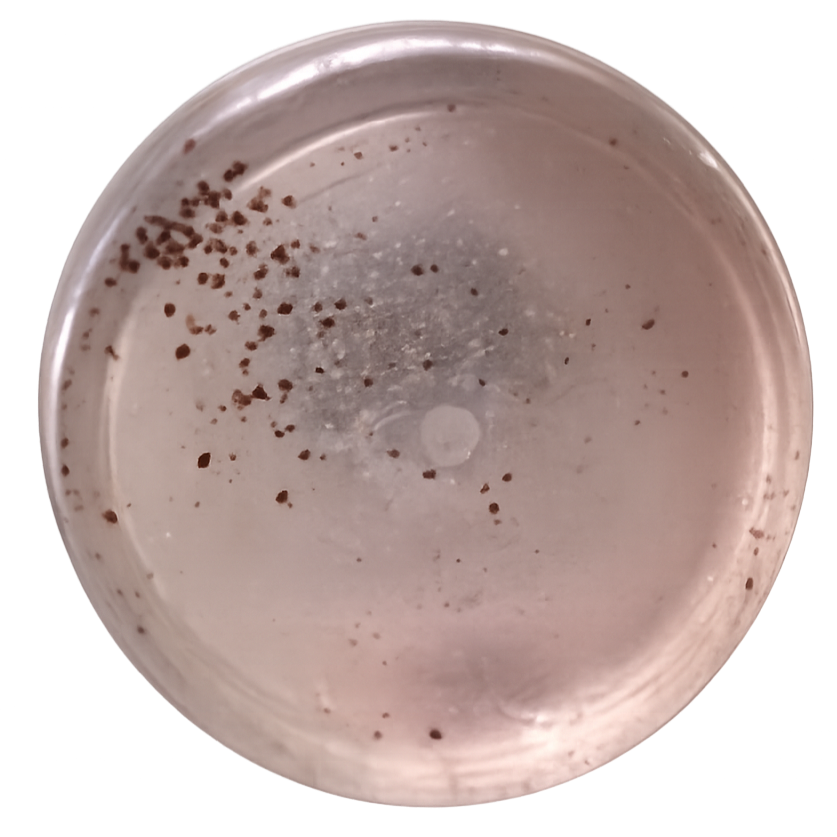
Varroa mites from past wash