Apiary Update — Moving Hives, Monitoring Health & Growing Stronger
Today was a solid day in the apiary — the kind of work that quietly builds the strength of future seasons.
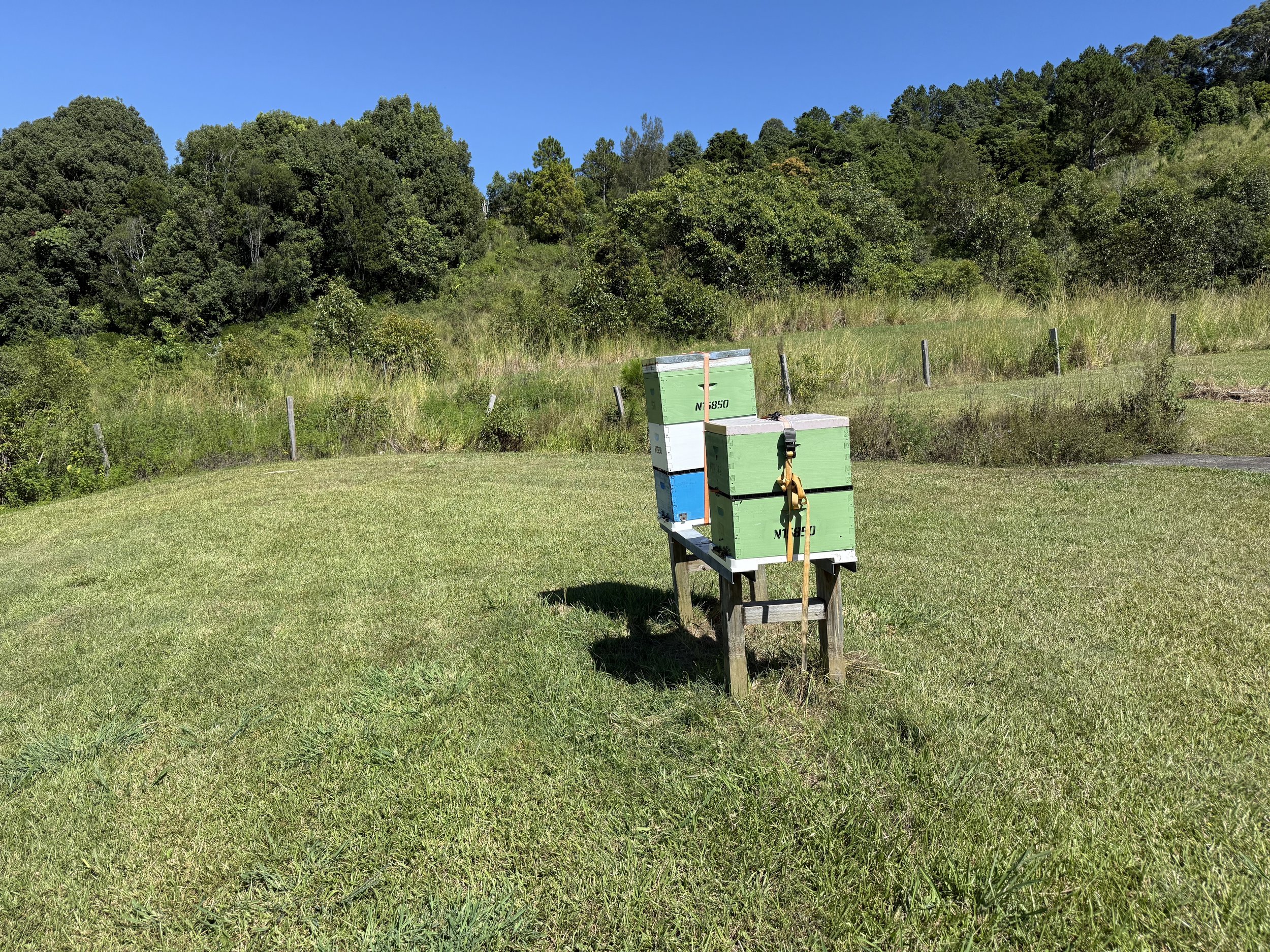
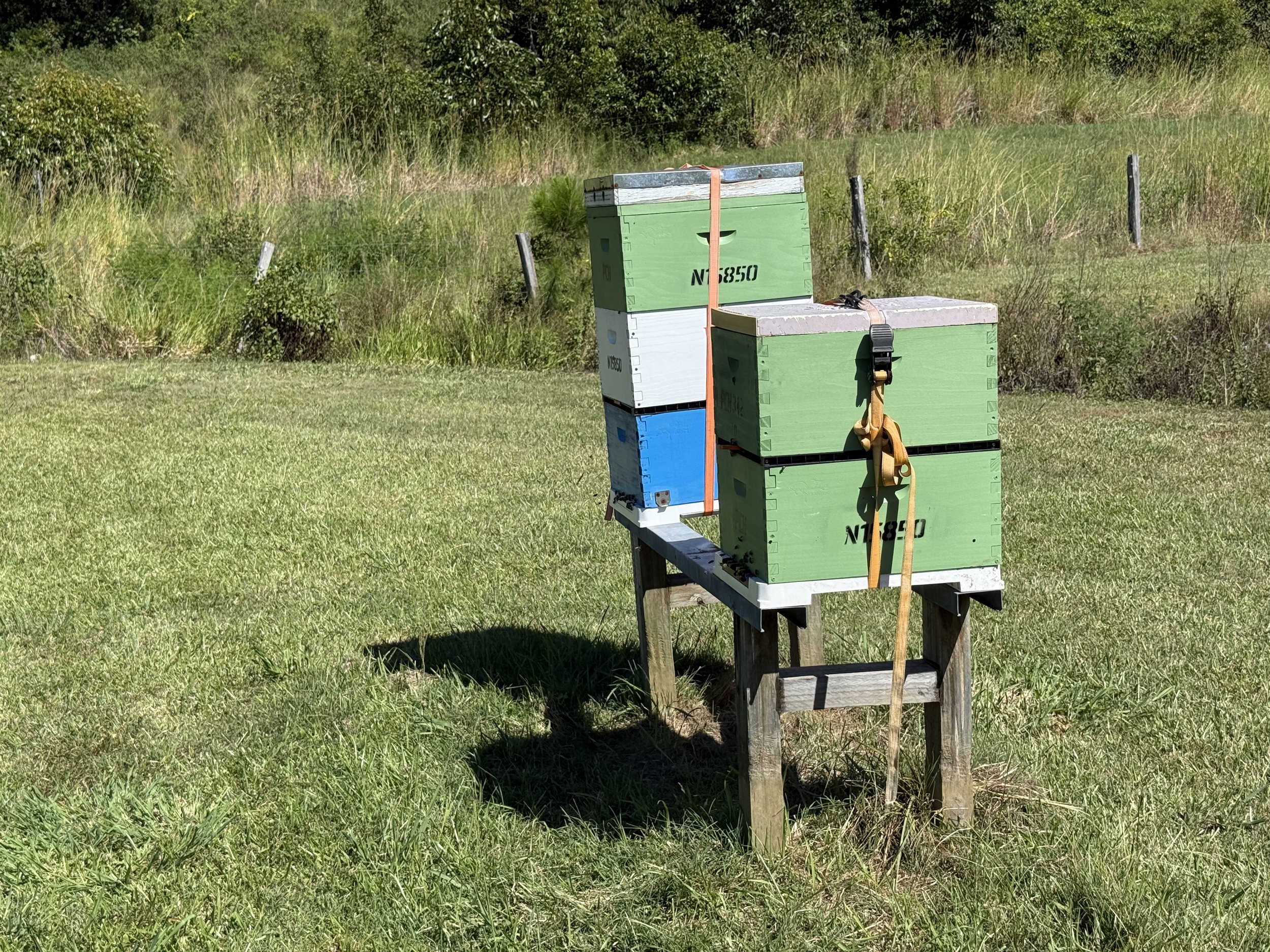
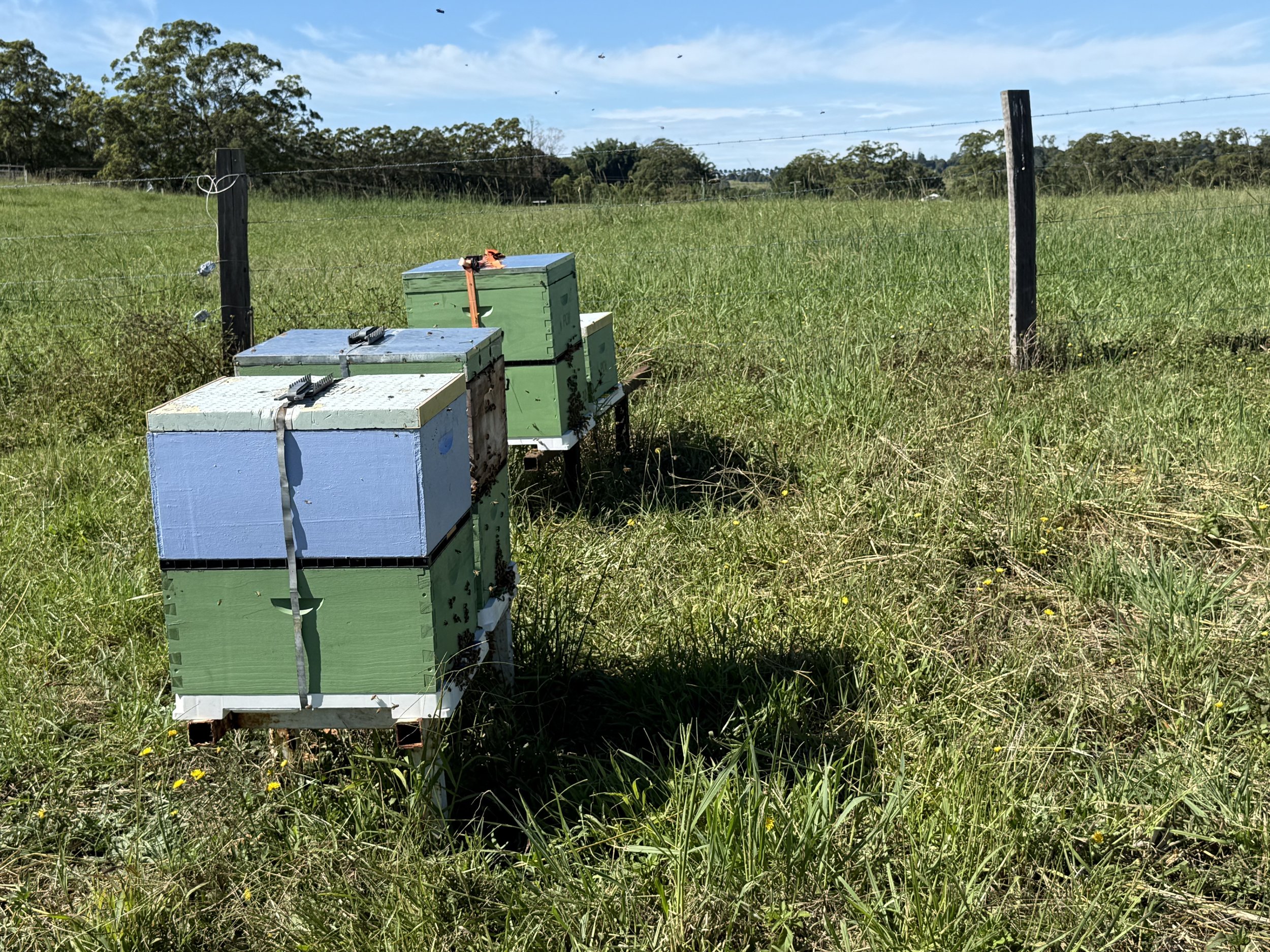
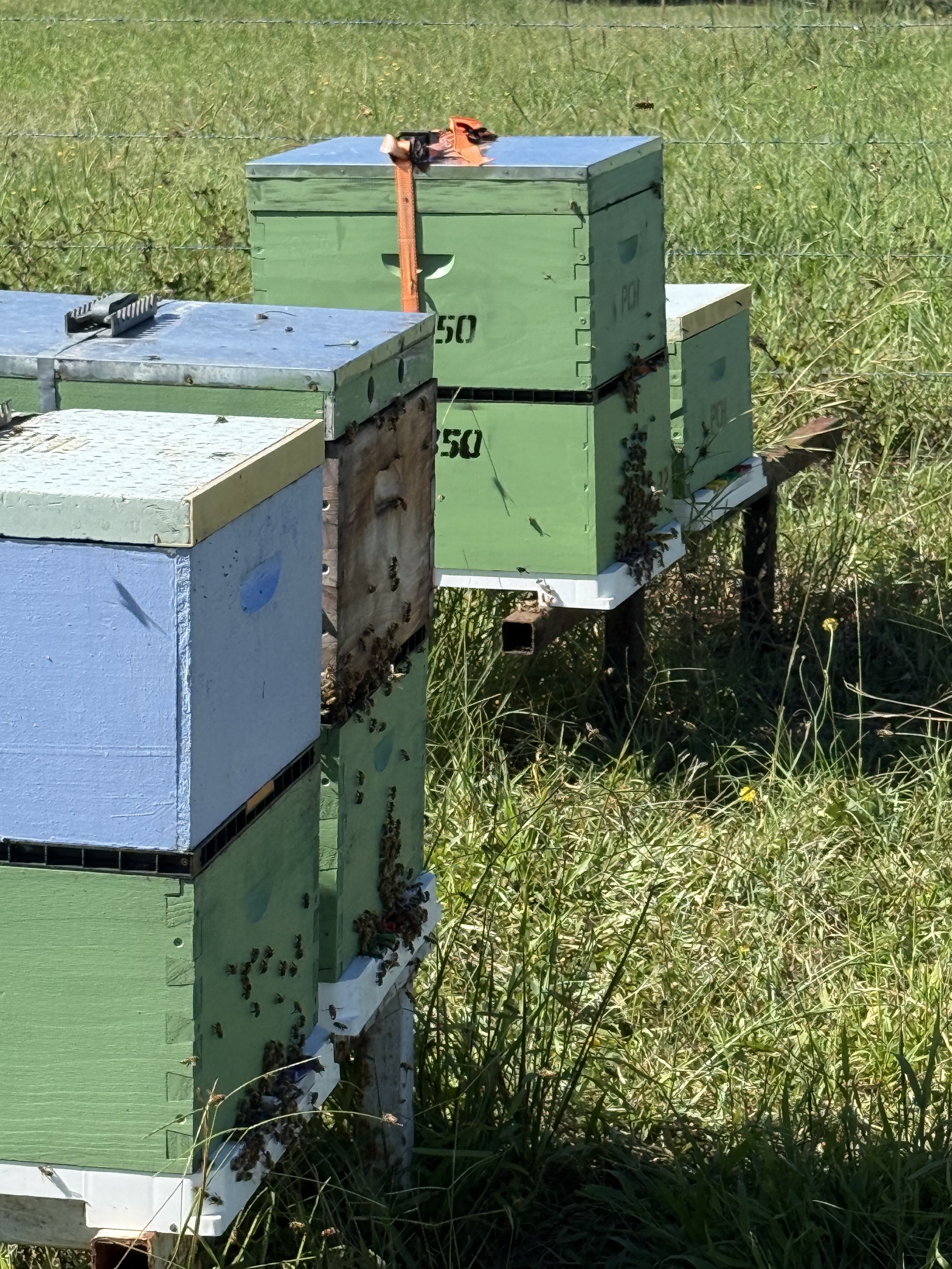
We moved one hive from our Codrington site across to McLeans Ridges, bringing that apiary up to four colonies. Keeping apiaries balanced helps colonies make better use of local forage and allows us to manage hive health more closely across our coastal locations.
While onsite, alcohol washes were carried out at both Newrybar and McLeans Ridges as part of our regular monitoring routine.
Encouragingly, both apiaries returned a zero mite count, which is always reassuring to see following treatment periods. Regular monitoring gives us confidence that colonies are healthy and continuing to recover well.
We also took a split from one of the stronger McLeans Ridges colonies to gradually increase hive numbers. Splitting strong colonies helps reduce swarming pressure while building future production hives.
Beekeeping is often a series of small decisions made week by week — moving colonies, checking health, and supporting growth at the right time.
Looking ahead, we’ll soon be trialling the Beestar hive monitoring system across our remote apiaries.
The goal is simple: better insight into colony conditions between inspections, helping us respond faster to changes in temperature, humidity, and hive activity without disturbing the bees.
Technology will never replace hands-on inspections, but tools like this may help us care for colonies more proactively — something we’re excited to explore and share as we learn.
Every strong hive today becomes future pollination, future honey, and a more resilient apiary tomorrow.
Apiary locations: Codrington • McLeans Ridges • Newrybar